

The Illuminati, a secret society that has captivated the imaginations of many, has been shrouded in mystery and speculation. In this post, we will delve into what we truly know about the Illuminati from a historical perspective, shedding light on the existence of its founder, Adam Weishaupt, and exploring whether the Illuminati persists in the contemporary world.

Adam Weishaupt: Historical Figure or Myth?
Adam Weishaupt, often credited as the founder of the Bavarian Illuminati, is indeed a real historical figure. Born on February 6, 1748, in Ingolstadt, Germany, Weishaupt was a professor of canon law at the University of Ingolstadt. In 1776, he established the Bavarian Illuminati, a secret society with lofty ideals of enlightenment and opposition to religious and political oppression. Weishaupt’s writings and correspondence provide evidence of his existence and involvement in the formation of the Illuminati.

Origins of the Illuminati
The exact origins of the Illuminati trace back to May 1, 1776, when Weishaupt founded the order in Ingolstadt. Influenced by the ideals of the Enlightenment and secret societies of the time, Weishaupt sought to create an organization that aimed to challenge the existing power structures and promote rational thought, freedom of expression, and equality.
The origin of the Eye of the Pyramid as a symbol of the Illuminati can be traced back to their alleged association with the Great Seal of the United States, specifically the one-dollar bill. The inclusion of the Eye of Providence (often referred to as the “All-Seeing Eye”) above the unfinished pyramid on the one-dollar bill has sparked speculation and conspiracy theories. However, it’s important to note that the connection between the Illuminati and the Eye of the Pyramid on the dollar bill is purely fictional and rooted in imaginative storytelling.

Adam Weishaupt did not cross the ocean to kidnap George Washington and take his place in ruling the world from the White House. The idea that the image of Weishaupt, the founder of the Illuminati, appears on the one-dollar bill has its origin in a satirical book called “Eye of the Pyramid.”
The Eye of Providence itself has historical and symbolic significance, representing vigilance and the watchful eye of God. The pyramid, on the other hand, symbolizes strength and endurance. These symbols were incorporated into the Great Seal as a representation of the United States and its ideals.
Regarding the phrase “Novus Ordo Seclorum” (New Order of the Ages), which is also found on the one-dollar bill, it is indeed a real Latin phrase. However, its association with the Illuminati is largely fictional. “Novus Ordo Seclorum” is believed to signify the beginning of a new era or a new order, symbolizing the ideals of a democratic and independent nation. While the phrase has been misinterpreted and tied to conspiracy theories, it was intended to represent the birth of the United States as a new nation rather than any secret society’s agenda.
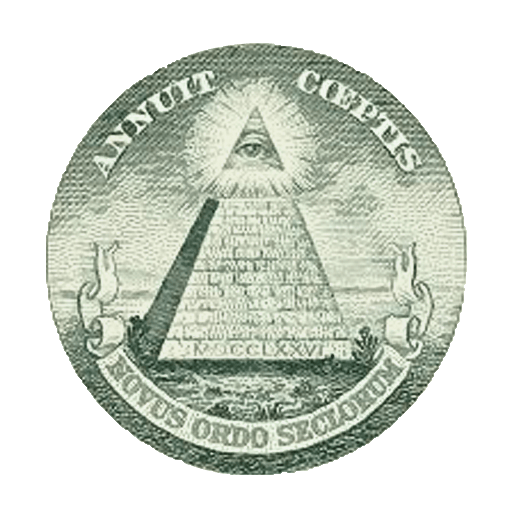
The Eye of the Pyramid and the phrase “Novus Ordo Seclorum” have been incorporated into the imagery on the one-dollar bill, but their association with the Illuminati is largely fictional and a product of imaginative storytelling rather than historical fact.



The Decline and Disbandment
The Bavarian Illuminati, under Weishaupt’s leadership, faced significant opposition and scrutiny from the Bavarian government and the Catholic Church. In the late 1780s, the Bavarian authorities launched a crackdown on secret societies, including the Illuminati. As a result, the order was disbanded and its members scattered.
CONTEMPORARY EXISTENCE OF THE ILLUMINATI



The belief in the Illuminati and its alleged influence on world affairs, despite lacking substantial evidence, can be attributed to a combination of factors. First, conspiracy theories have long captivated human imagination, offering a sense of intrigue and mystery. The notion of a secretive group pulling strings behind the scenes resonates with a desire to find explanations for complex events and power dynamics.
Fiction?
While rumors and conspiracy theories about the continued existence of the Illuminati persist, there is no concrete evidence to support the claim that the Bavarian Illuminati, as founded by Weishaupt, continues to operate today. Many modern references to the Illuminati often stem from fictional literature, popular culture, and conspiracy theories, rather than verifiable historical facts.

Additionally, historical events and societal anxieties have fueled the popularity of Illuminati conspiracies. Economic disparities, political corruption, and the rapid exchange of information in the digital age contribute to a climate where some individuals seek simplified narratives to make sense of a complex world. Furthermore, the ubiquity of pop culture references and fictional portrayals of the Illuminati in books, movies, and music has blurred the lines between fact and fiction, further perpetuating the allure of the conspiracy. Despite lacking concrete evidence, the belief in the Illuminati persists as a manifestation of our collective fascination with secrecy, power, and the desire to uncover hidden truths.


Disclaimer:
This article provides factual information, although its illustrations include portraits co-created with AI.
This article is not sponsored by Illuminati Gmbh Germany, and especially its creation has nothing to do with the Bavarian branch of the Illuminati, which does not exist and has no influence over independent press.
No one encouraged us to write this article. Just one day, the author decided to share this joyful news with the beloved community that the Illuminati is merely a rumor, a crazy tale concocted by paranoid minds fascinated with aluminum foil and low-budget movies.




 MODDING SIMULACRA
Leave a comment