
Is it fair to use copyrighted work to train graphic models? Is it fair to use the work of living artists without permission for such processes? Is it fair that I use such a graphic model? Is it fair that I generate images, as I did today, inspired by an artist’s name?
Should we have to pay specifically for learning? Do humans have to pay every time we see a logo or copyrighted content? Do we have to pay each time we open a book or a newspaper, or watch a movie? What kind of perspective should we adopt? Who should decide about this? And what are the interests of us, common folks?
Inspiration, Plagiarism, Remix, Reset, Restart, Recycling, Remake – there are so many old and new terms we use to describe what happens with our culture and our relationship to art. But what do these terms mean in practice?
A simple question from a good old friend sparked a thought-provoking exploration of AI-generated images: “What about Beksinski? Have you tried with him?” For some, this might seem enigmatic, so here’s an explanation: Zdzisław Beksiński is one of the best. He stands at the summit of artistic achievement. When discussing the portrayal of schizophrenic structures and fantastic landscapes, it’s nearly impossible not to mention his enormous influence on this genre of art. His life mirrored his paintings, and vice versa. While there are books and movies about this legendary painter, I’ll keep this note brief.
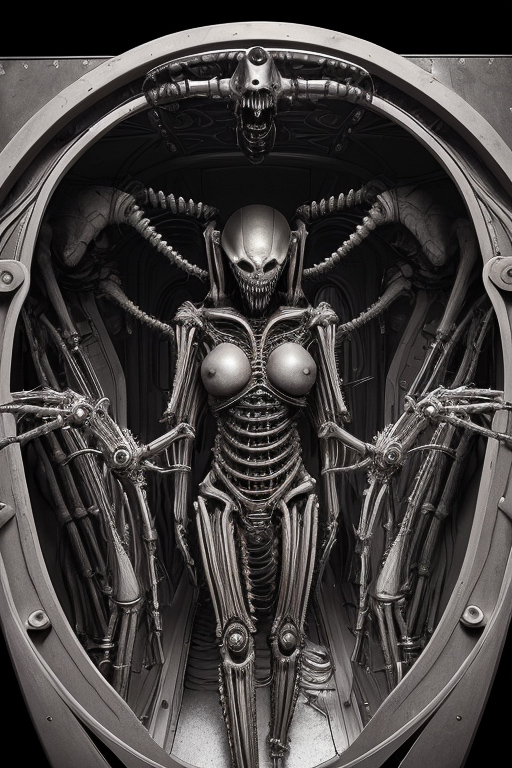
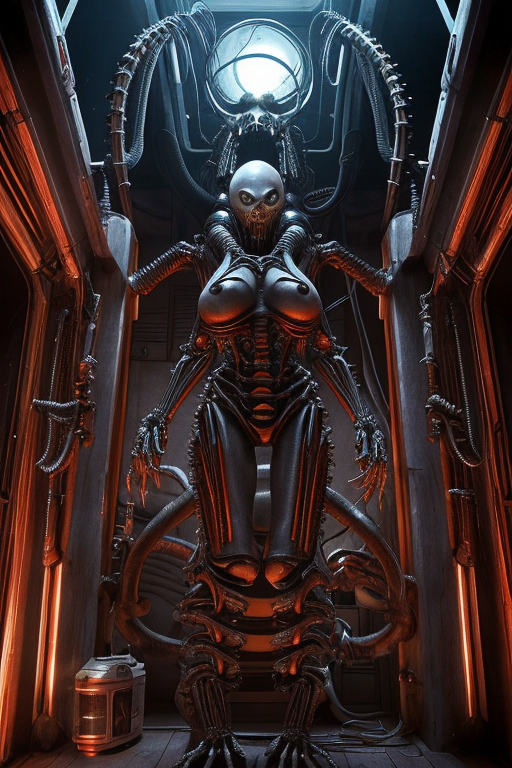
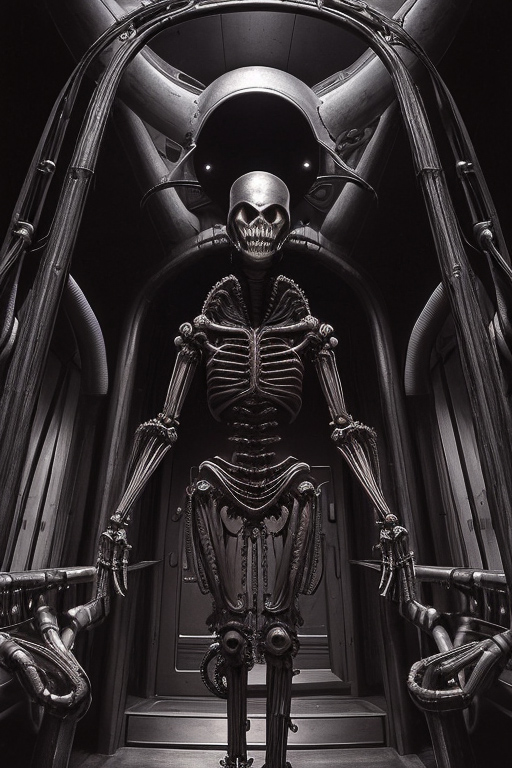
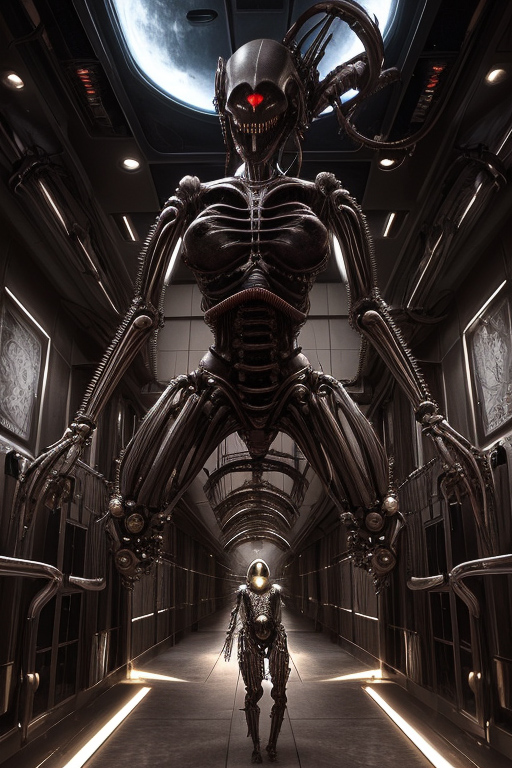

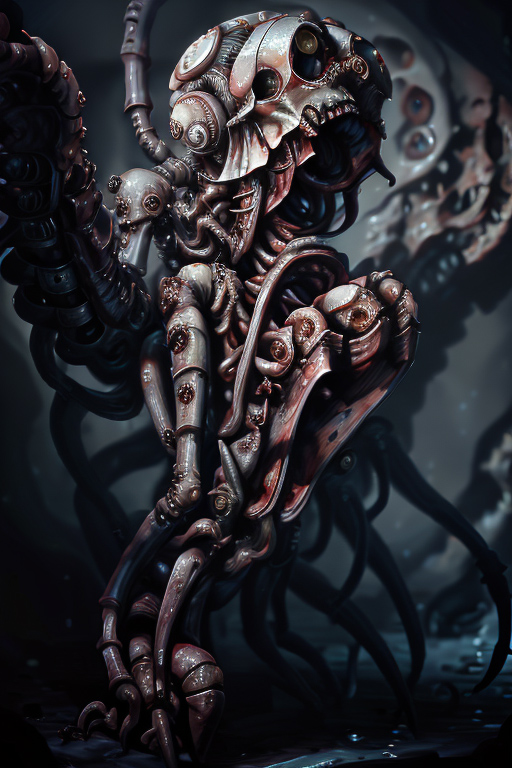
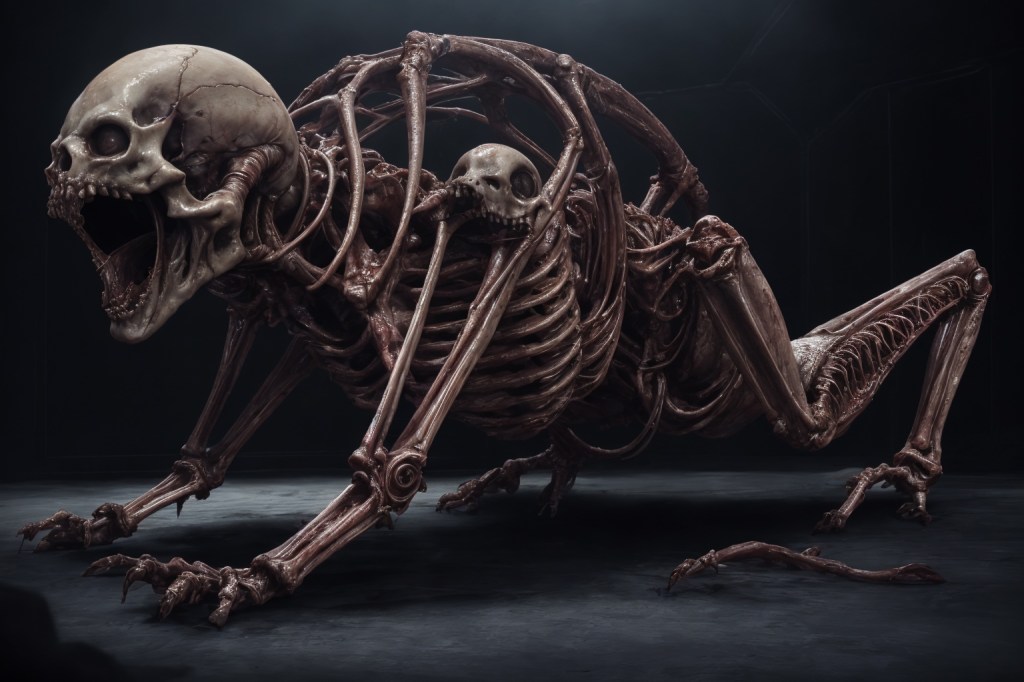
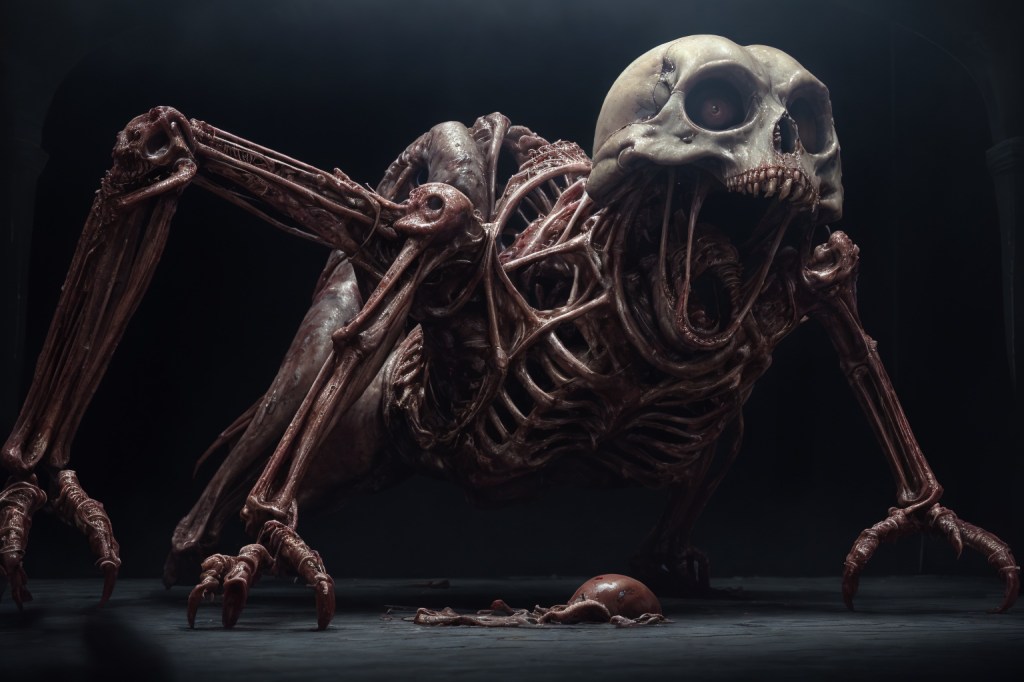
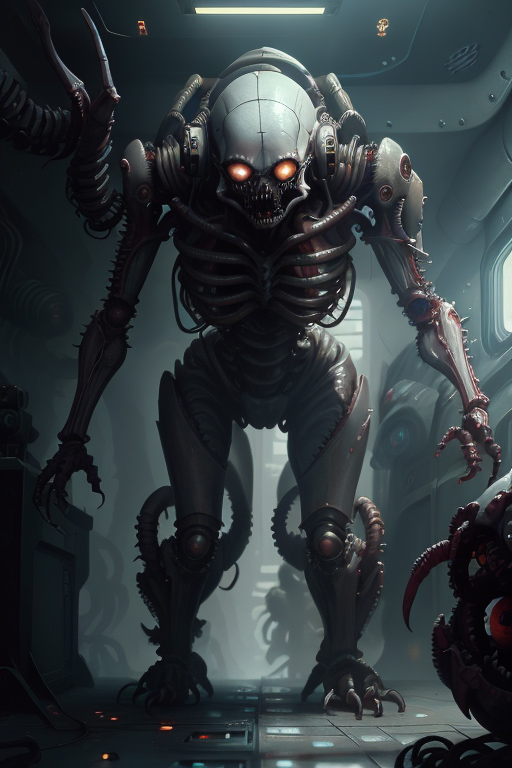

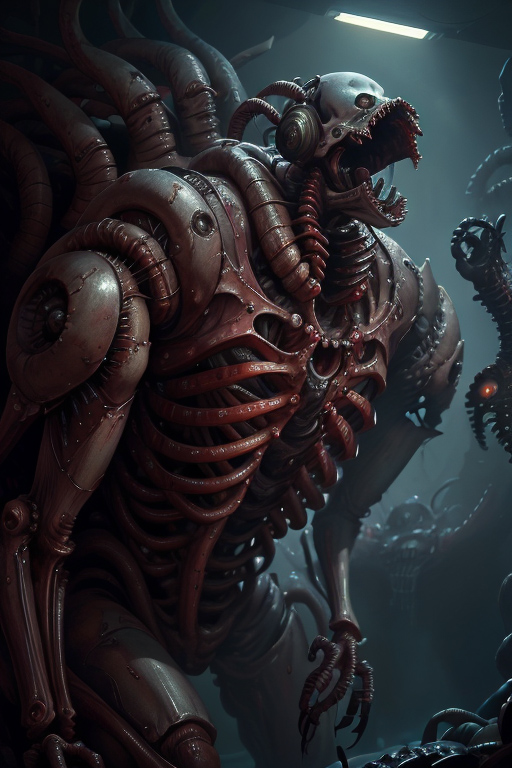
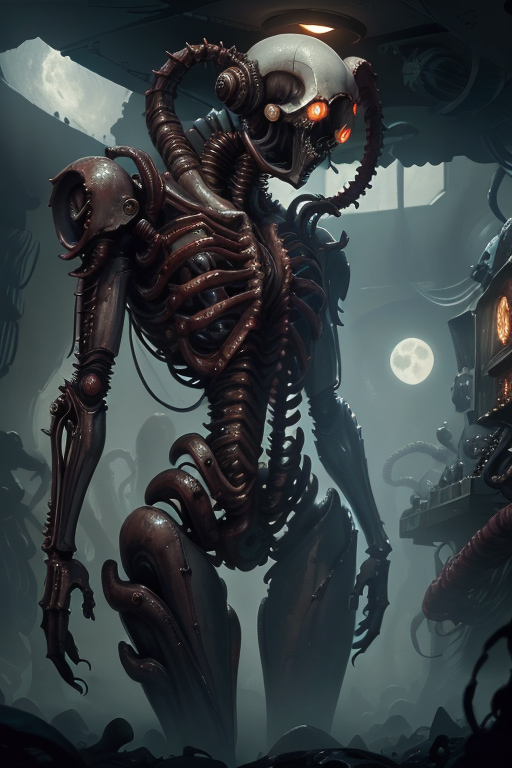
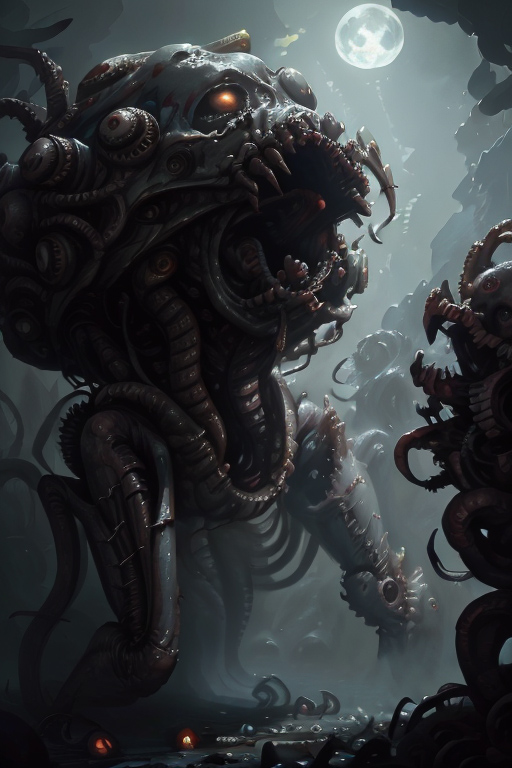
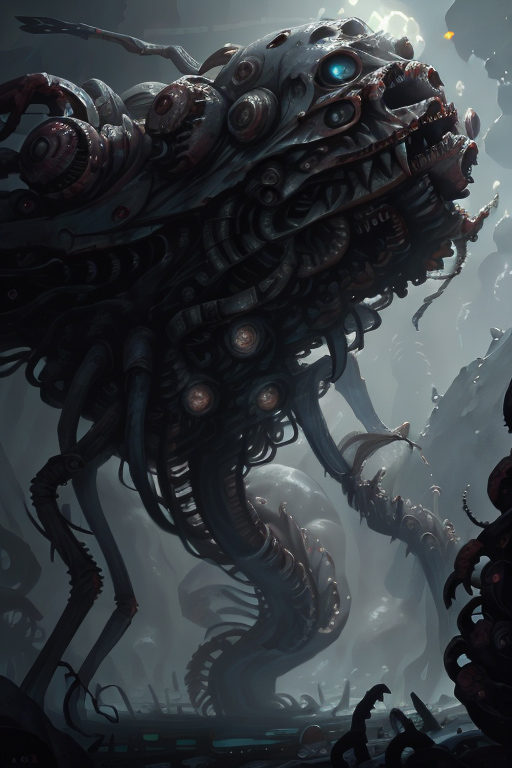
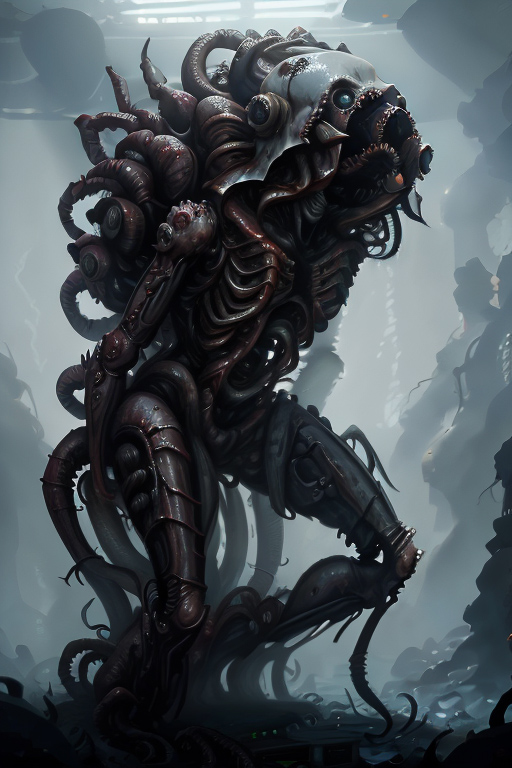
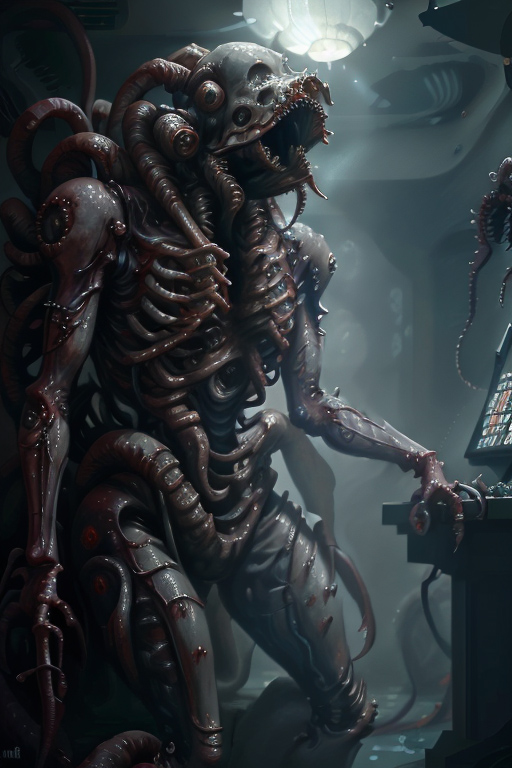
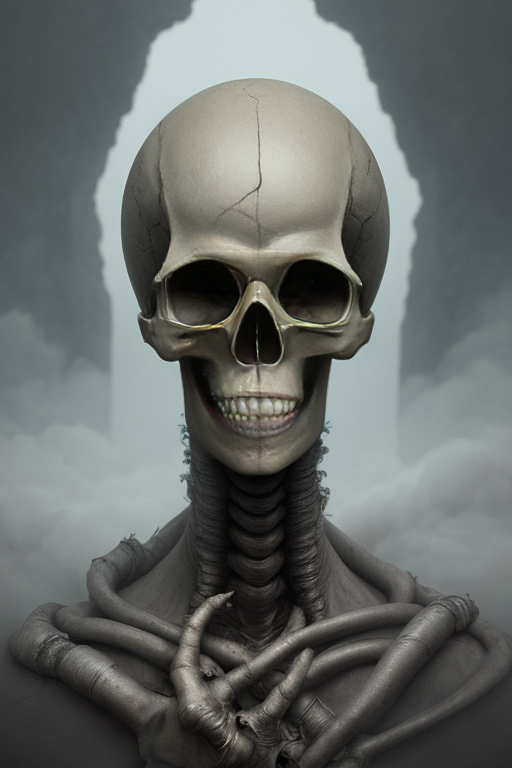
Slideshow: since we are just having fun, pictures here represent variations about H.R Geiger, Zdzislaw Beksinski, with various image boosters/modifiers (LORAs, text, etc.)
What’s interesting here is that what appears to be a simple question requires delving into a spectrum of issues related to AI image generation and the concept of art itself. But let’s delve into this in a moment.
Let’s highlight the issues tied to this matter:
- Ethical concerns: Drawing inspiration from Rembrandt (1606–1669) isn’t the same as legally working with Beksiński’s (1929-2005) works.
- The broad topic: Where does the line lie between inspiration, remix, revitalization, re-colorization, and so on? To what extent can we draw inspiration?
- If we draw inspiration, what should we focus on? Should we only consider the aesthetics, or should we also analyze Beksiński’s works from a technical standpoint—like the type of paint used, brush thickness, and its impact on the viewer’s perception?
- How do we go about this in termns of AI-imagery? What tools, applications, and queries should we use?
- The actual state of things: How do other creators approach this, and how has AI been trained? Responsible AI usage is also a critical concern.
- The fun question: This question captures the essence of creating AI-generated images—a process that sometimes resembles the alchemical pursuit of the philosopher’s stone. Mix a few ingredients, simmer, and see what emerges. Interestingly, this process triggers the happiness hormone associated with anticipation—(“What will happen?”)—but also activates the reward hormone upon the image’s appearance, as it’s always a surprise. An incredibly intriguing matter.
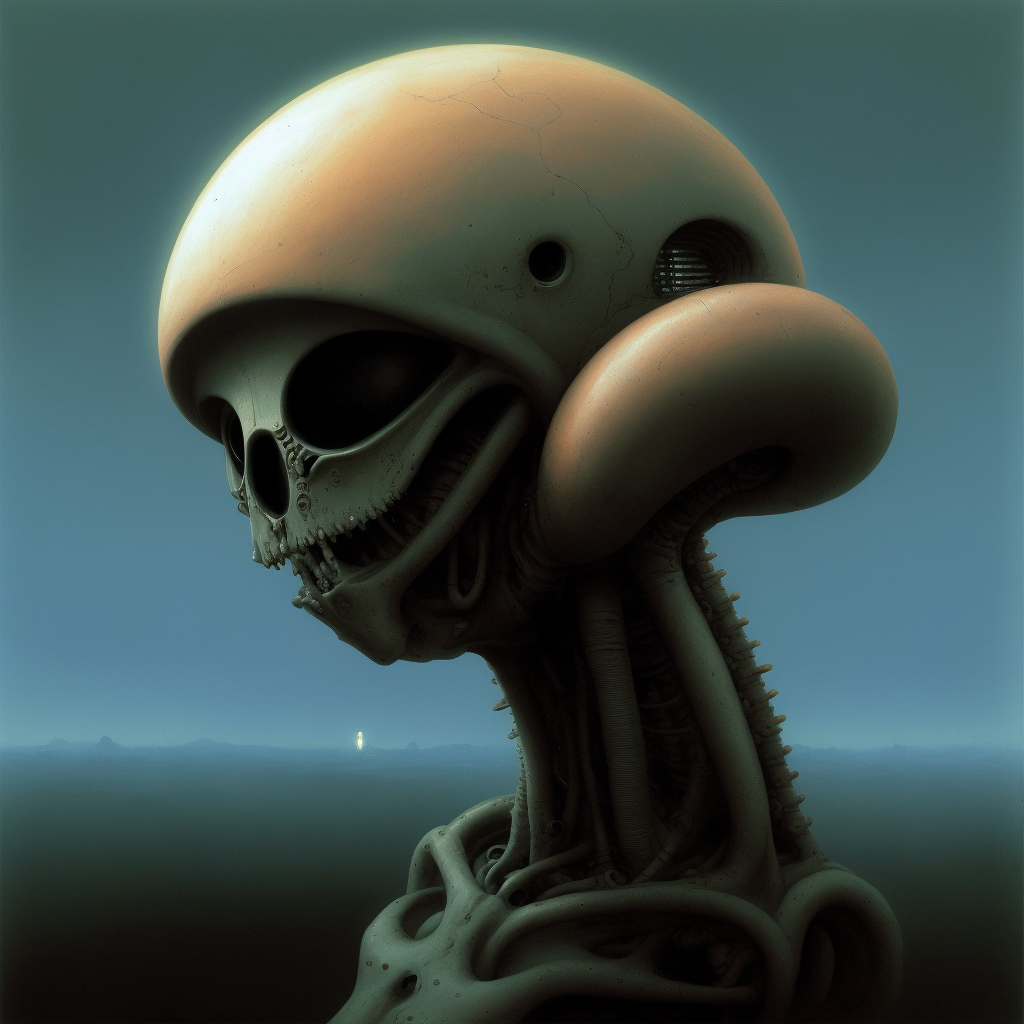
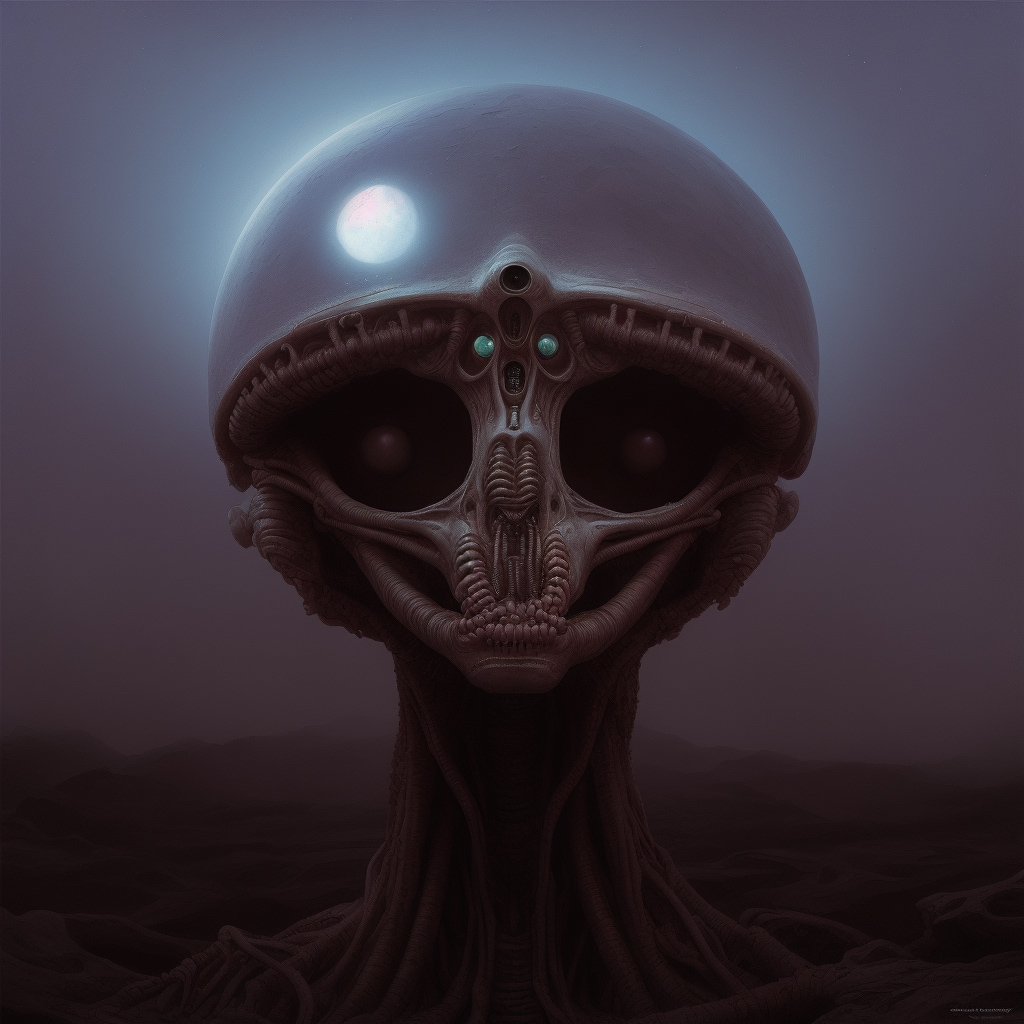
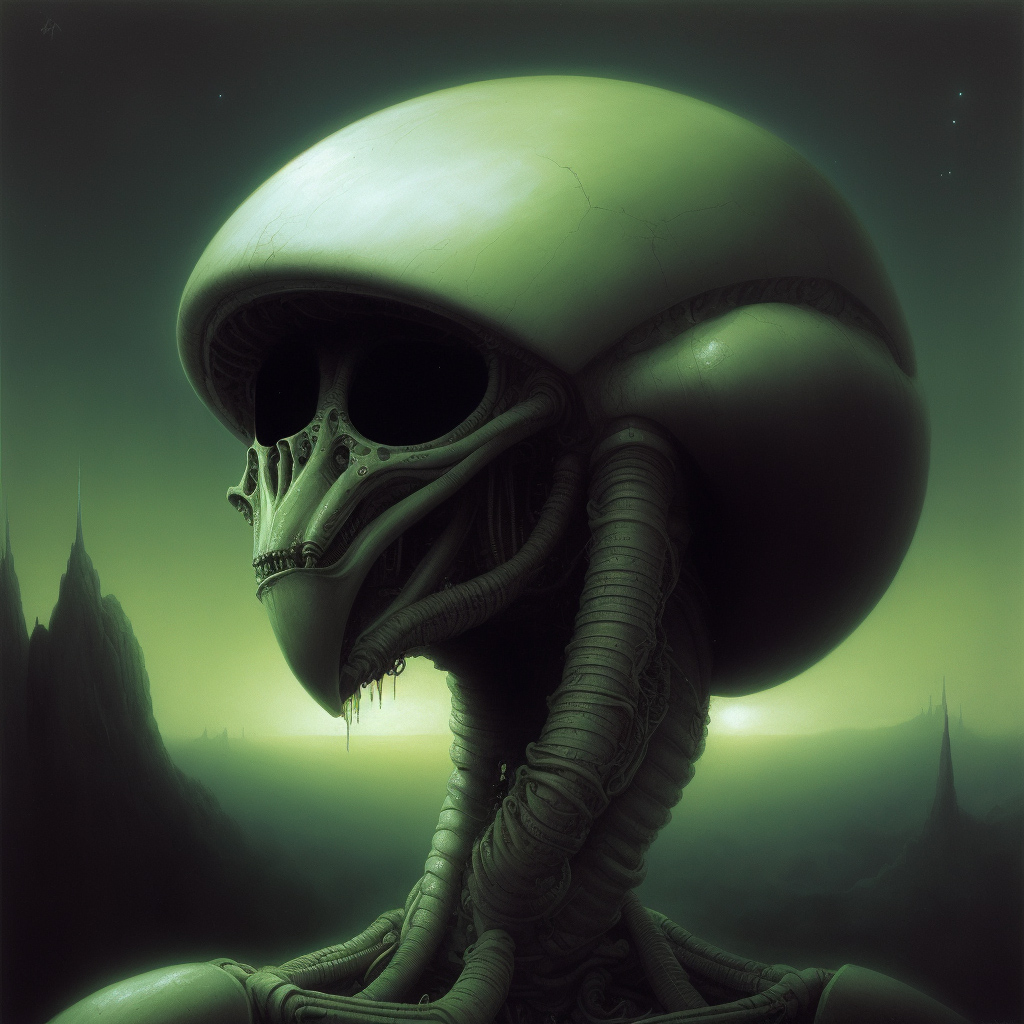
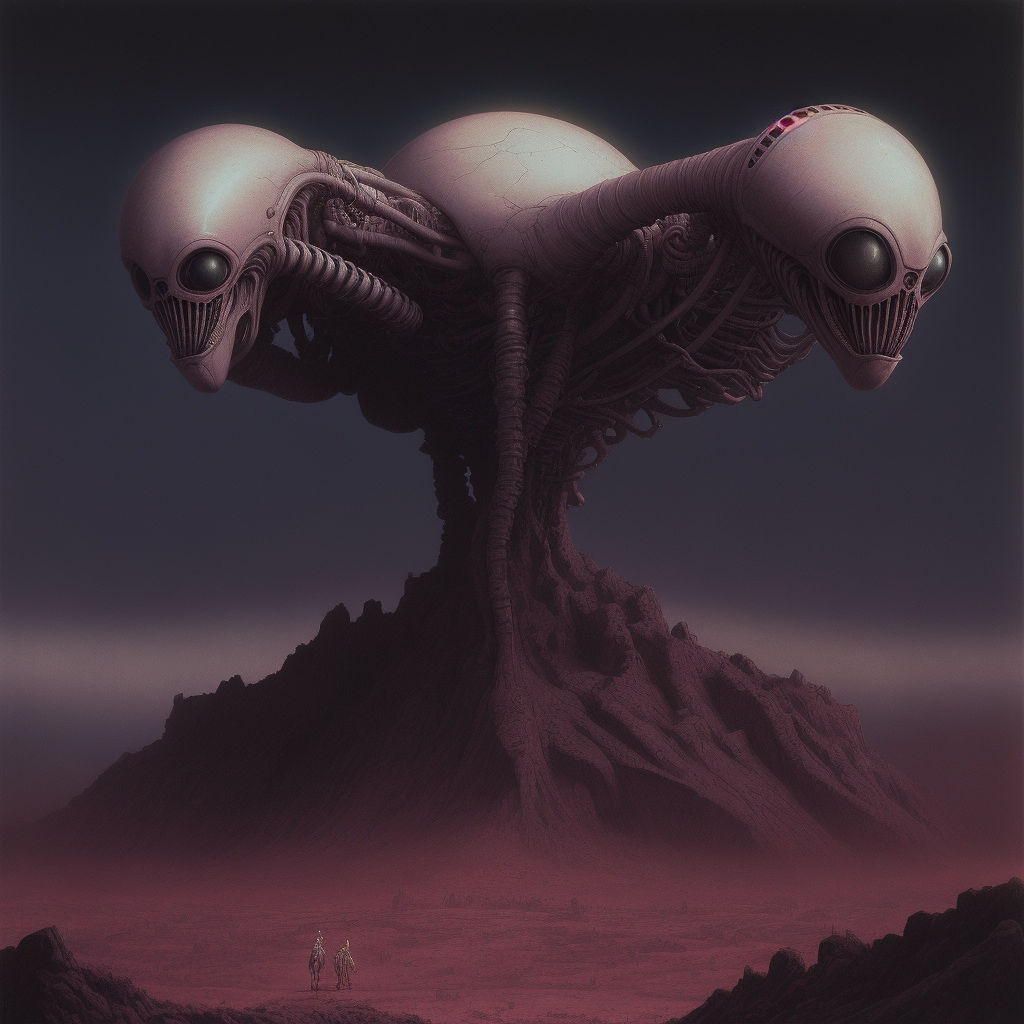
The simplest way to begin is to start with the current state of affairs. It’s worth confirming that Beksiński’s artworks have been used to train AI, and his name has been used to evoke a specific effect. I’m definitely talking about the whole Stable-Diffusion family, and I’d be surprised if Midjourney hasn’t been trained on Beksiński. Definitely Stable-Diffusion, as its files contain the necessary references—I’ve seen them.
Regarding the boundaries of inspiration and how much can be utilized, it seems that the first lawsuits are emerging, primarily from writers. It appears that these matters will need to be settled in court. By the time a verdict is reached, it might be too late, because:
- If compensation is mandated, it won’t change the fact that artists’ works have already been used.
- If, for instance, a court were to ban the use of the works, it would be too late, as models could be trained on variants of the works or on the first generation of AI-generated images inspired by the artist. In fact, this is already happening—each “trainer,” including regular people, is training subsequent generations of their models, feeding them refined images rather than originals.
So, actually it is too late to stop it.
Before we start doing anything, let’s establish that it’s an experimental test rather than a serious artistic endeavor.
But if we’re going to do this, let’s do it thoroughly—starting with analysis. Here, it’s worth noting that most of us are familiar with Beksiński’s work primarily through digital reproductions. And these reproductions—at least the ones I’ve seen—have a significant flaw: they don’t capture the texture (or at most, about 10-15%) of Beksiński’s paintings, which is incredibly crucial, especially in certain phases of his creative journey. I know this from my visit to the Zdzisław Beksiński Museum in the beautiful Polish city of Sanok, where I overheard the tour guide explaining the intricacies of the art to tourists. The museum also houses an excellent collection of icons, making it a must-see.
Returning to the paintings—I was mesmerized by the experience of encountering Beksiński’s original works. Some of them become “understandable” when seen in direct contact. By that, I mean that more sense, more intent behind these works starts to emerge, and one can feel their interconnectedness. In the stage known as “counterpoint” (remember that term), Beksiński created almost three-dimensional images, often applying paint very thickly, turning it into a form itself.
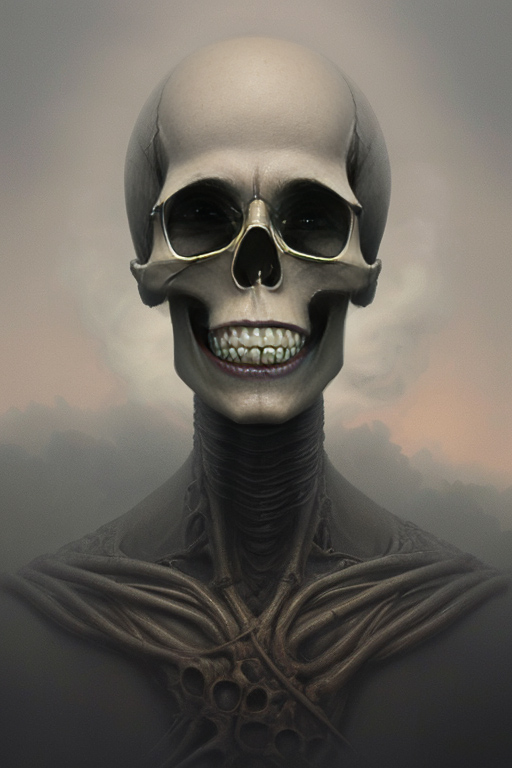
So, the question here is whether we’re solely focusing on pure aesthetics or trying to faithfully capture the distinctive creativity.
If we were to work on capturing the texture, we’d need to create two images: one focused on aesthetics and the other on texture. It’s doable, but it’s too complex for the playful nature of this test.
Let’s see the effects of invoking Beksiński—the artist from the beyond. For this, we’ll use Stable Diffusion, and several different graphical models, spanning from dedicated ones to creating realistic images to those that handle drawings, sketches, and non-realistic depictions just as effectively.
Here’s what we get when we input “Beksinski.” The effect is random, depending on the seed, which ensures that we won’t produce the same image twice, even using the same query.

prompt for this picture is just ‘beksinski’ click for details
prompt -> beksinski
Steps: 20, Sampler: Euler a, CFG scale: 7, Seed: 1646356662, Size: 512×512, Model hash: e346340664, Model: A-C-SemiReal-m11beauty-SLIM, Clip skip: 2, Version: v1.2.1
Wow! Very close to Beksinski’s art touch and style.
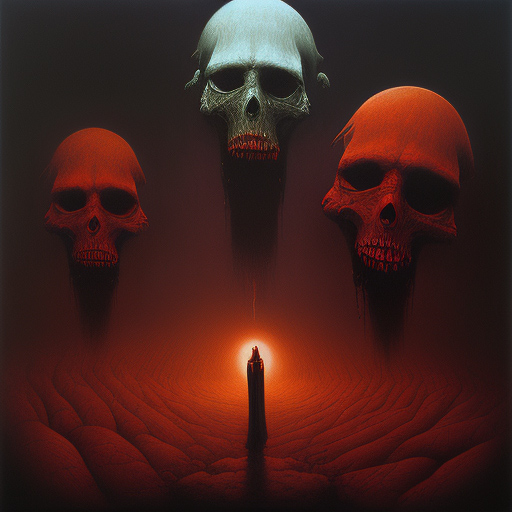
This prompt is beksinski too, but it uses more realistic image-engine
Below a few examples, what happens, when we enter prompt ‘Beksinski’.👇
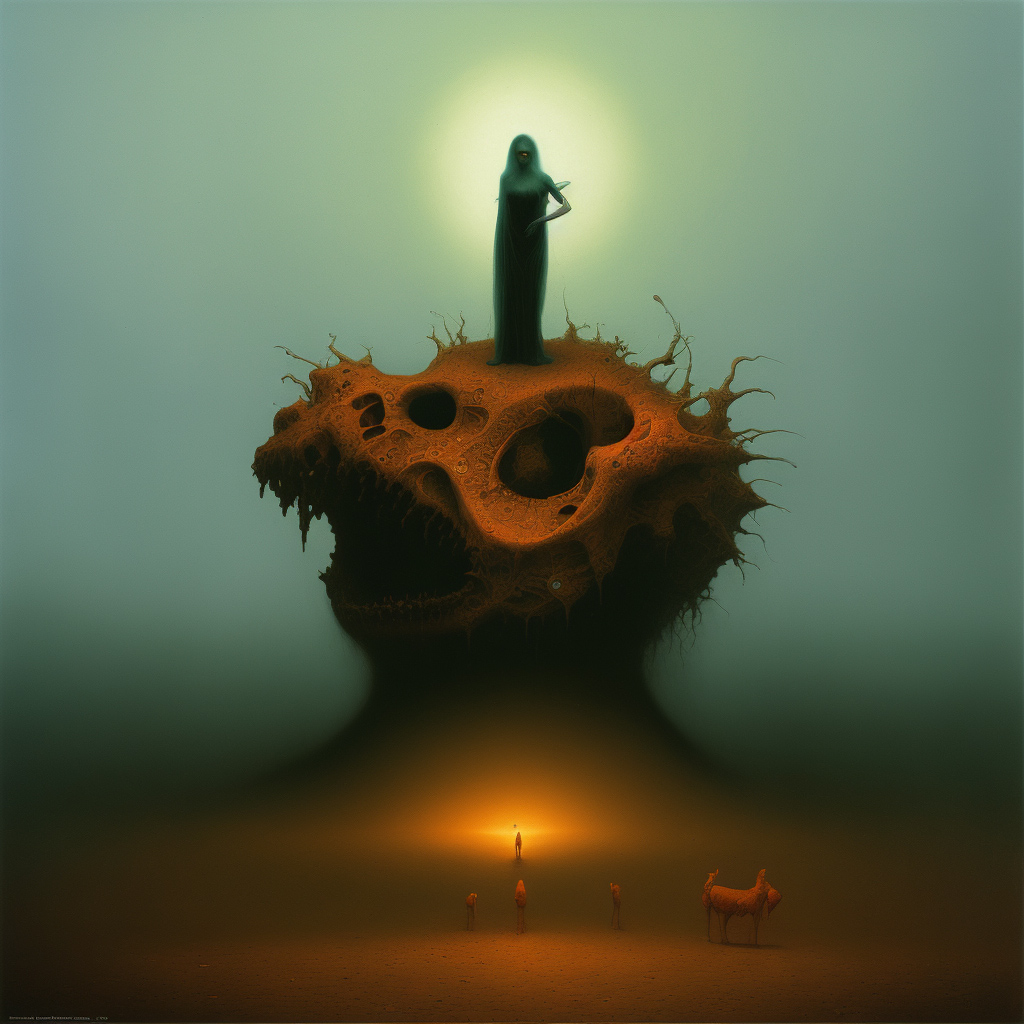
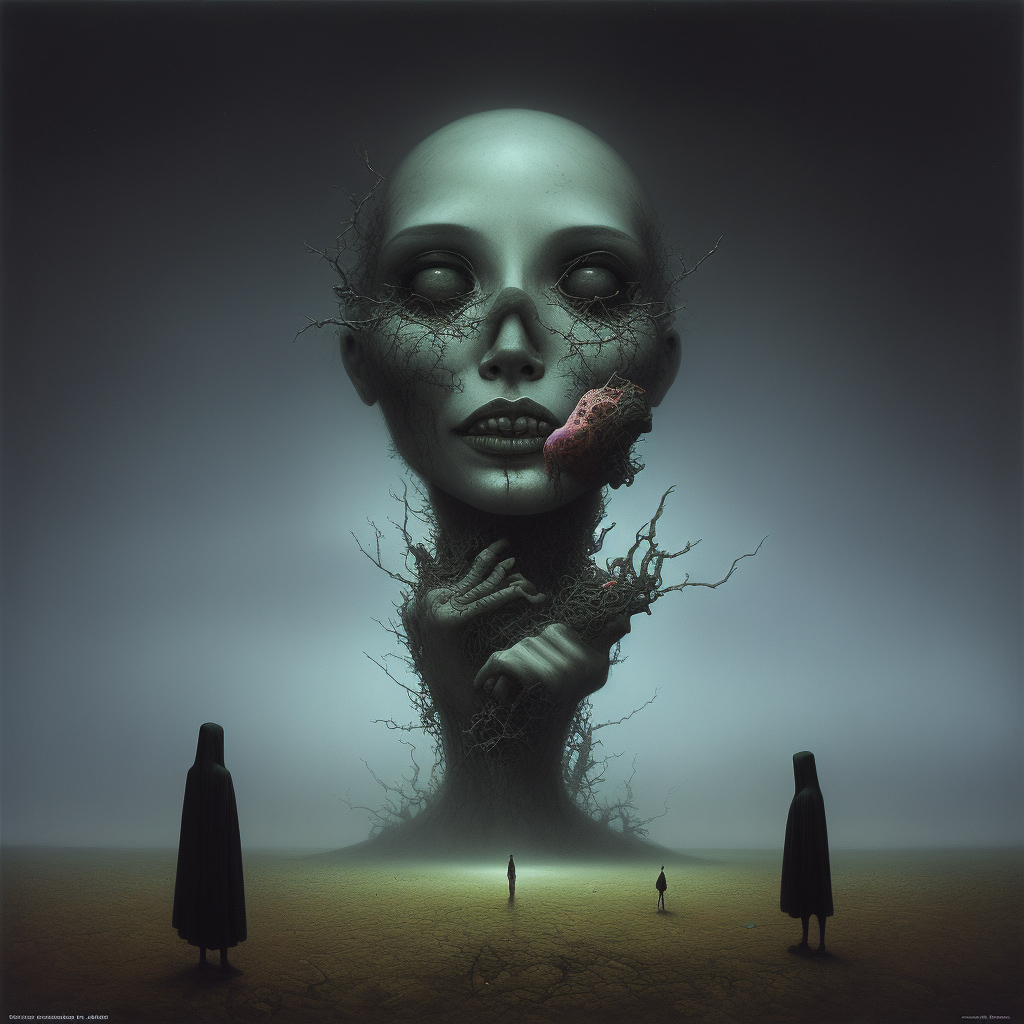
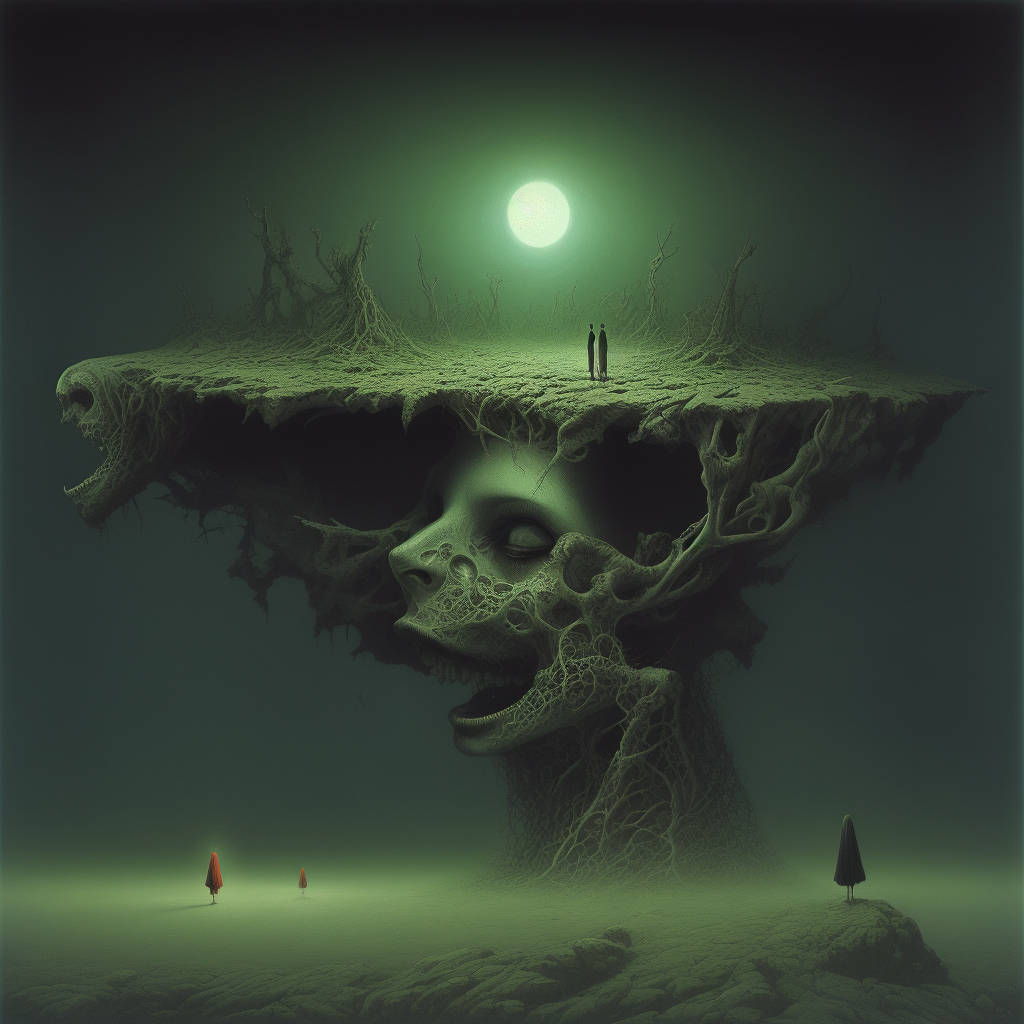
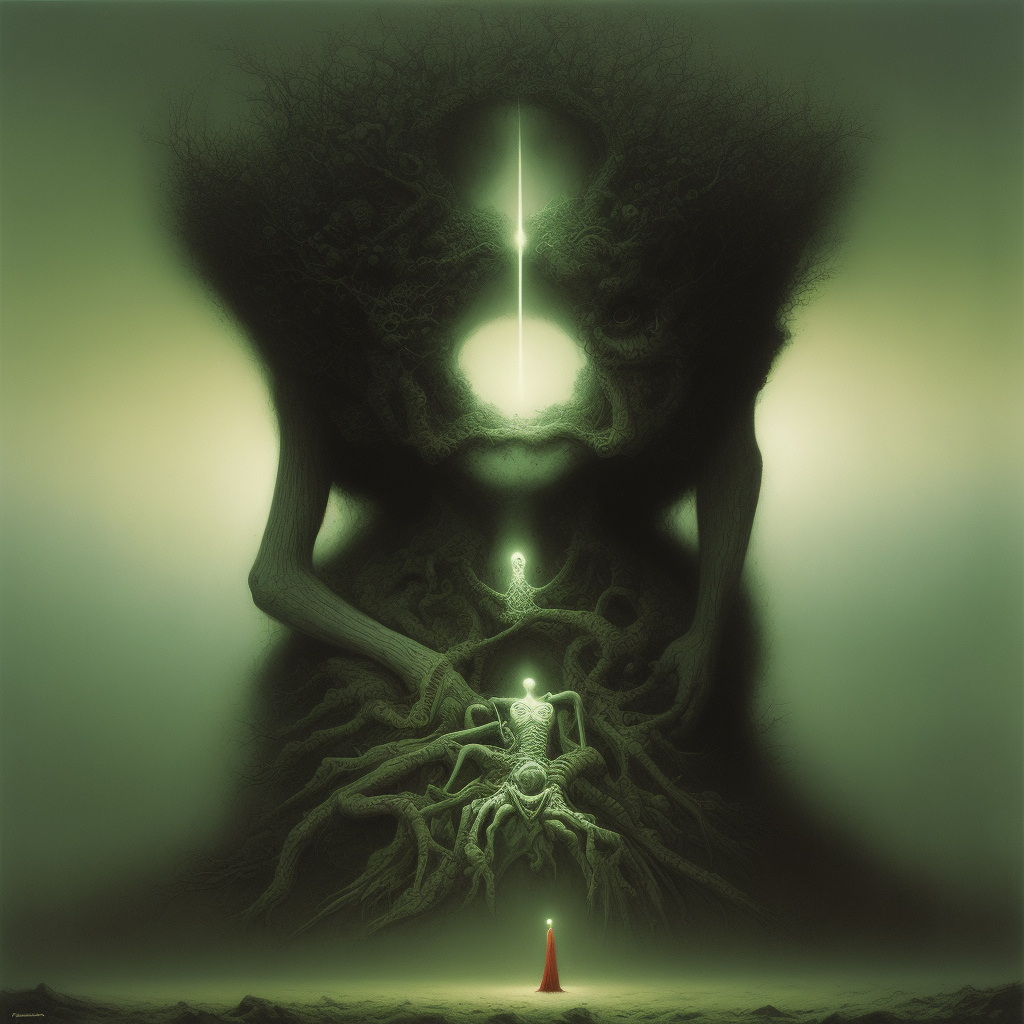
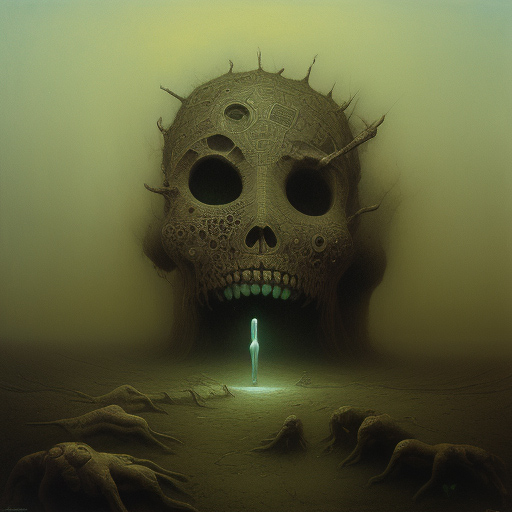
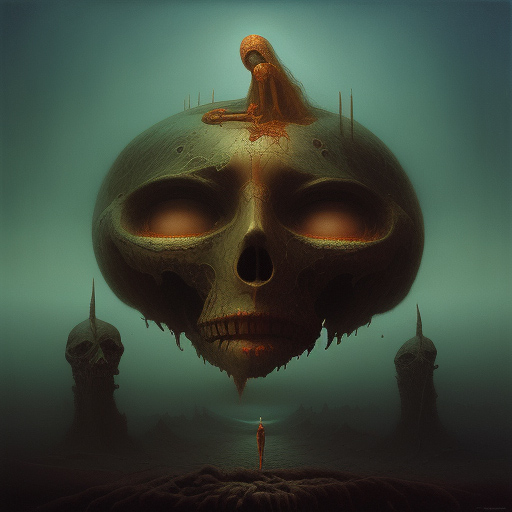
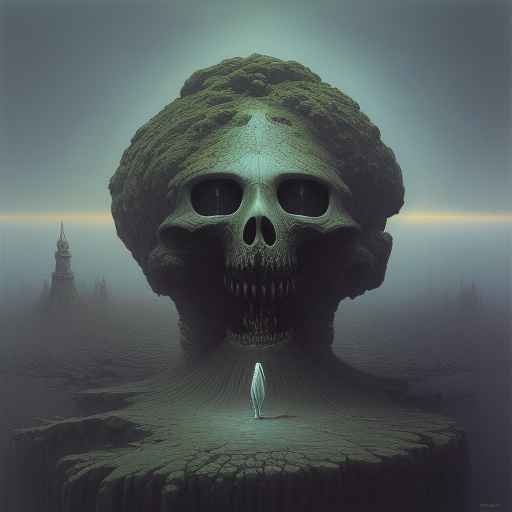
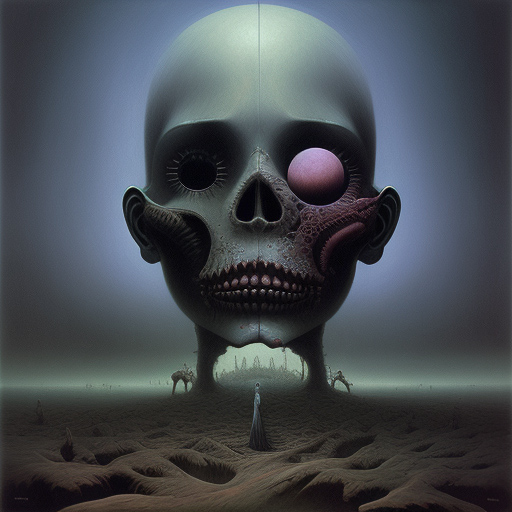
Now, remember, when I mentioned ‘contrapoint’? So, Beksinski liked to draw a calm, monochromatic image, and then to insert, sometimes very vivid and colorful element, as a counter to the whole image. Now, check, how AI realized exactly same concept.

And now since we are just playing, let us invite mr geiger to the party, and add some boosters, LORAs, etc, and see what happens.

Not, bad, not great, but clearly you can feel the Geiger vibe in the images. I think I overloaded prompt a bit, and this is not great too.
Also I used GPT to create set of prompts in a descriptive fashion, which is questionable. Sometimes it can give you great effects, but usually you should spend some time refining results from gpt.
You can check my template below. I feed it and then ask GPT to refine it to a new subject. (GPT, use this text as a template and write me a prompt for stable diffusion about XYZ)
PROMPT TEMPLATE
Title: Gigeresque Terror: H.R. Giger’s Alien Emergence on the Nostromo
Description: Step into a nightmare crafted by the master of biomechanical artistry, H.R. Giger, as his iconic style takes center stage aboard the Nostromo spaceship. Amidst the cold, labyrinthine corridors of the ship, the crew’s desperate whispers are drowned by the rhythmic thudding of their hearts. In this cinematic still, the dark, metallic environment is infused with Giger’s signature blend of the macabre and the mechanical.
From the inky shadows emerges the Alien, a nightmare given form, sinuously stalking its human prey. Giger’s influence is palpable in every sinew, every biomechanical intricacy of the creature’s design. Its elongated head, adorned with the chilling biomechanical details that Giger is renowned for, is a grotesque masterpiece of surrealist terror.
As the ship’s bluish emergency lights cast an eerie glow, the Alien’s phosphorescent bio-organic structure seems to pulsate with malevolence. This scene captures the essence of Giger’s nightmarish vision, his artistic DNA woven seamlessly into the fabric of the film’s terror-inducing atmosphere.
Modifiers: Detailed, realistic, high resolution, cinematic still, H.R. Giger’s signature style, biomechanical artistry, iconic influence, sinuously stalking, macabre and mechanical, surreal terror, phosphorescent bio-organic structure.
Negative Prompts: Low quality, distorted figures, unnatural colors, blurry, unrealistic, poor rendering, disproportionate, logo, watermark, cropped, worst quality, poorly lit, glitch, out of focus, mutilated, poorly drawn, disfigured, gross proportions.
Additional Tags: (Nostromo spaceship), (nightmarish vision), (surrealist horror), (chilling biomechanical details), (sinewy creature), (alien predation), (Gigeresque nightmare).
As you see, my template is divided into positive and negative prompt. It has modifiers, which might be also strengthened by using them with brackets and number:
example: (beksinski):1.15 will increase importance of artist style.
more about generating a good prompt see there at the source
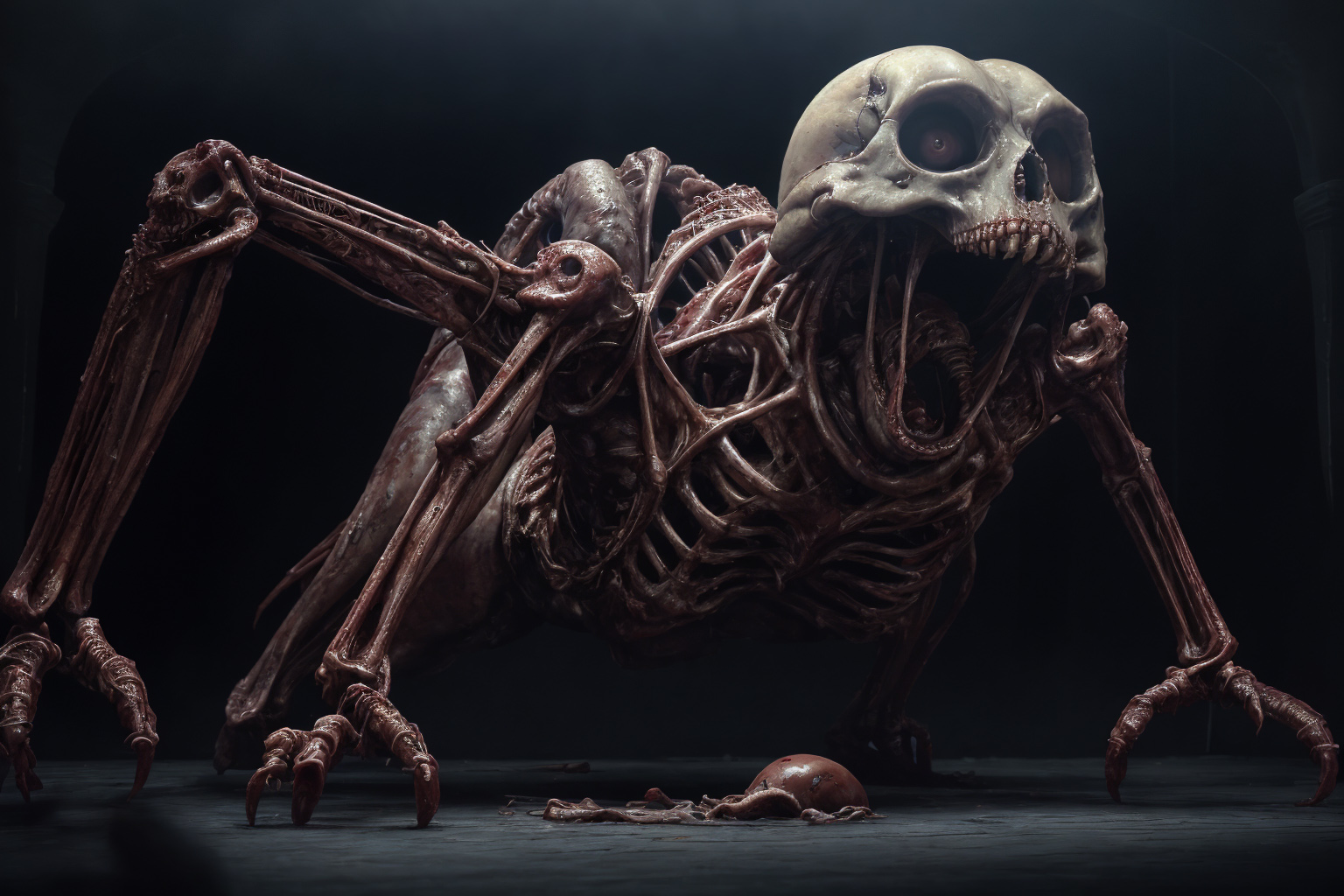
And from this part of experiment I think two images below are most interesting keeping good balance between being something new but still keeping referation to Beksinski’s art.👇👍
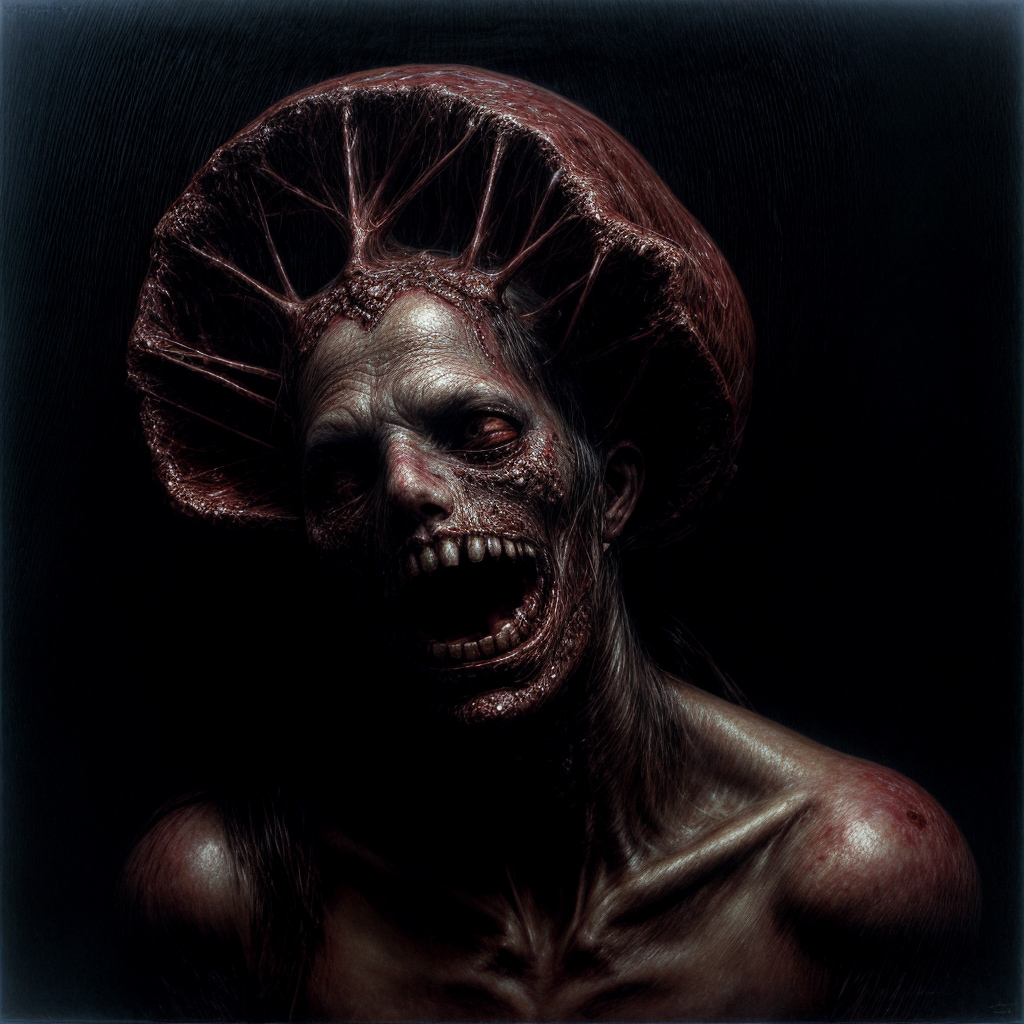
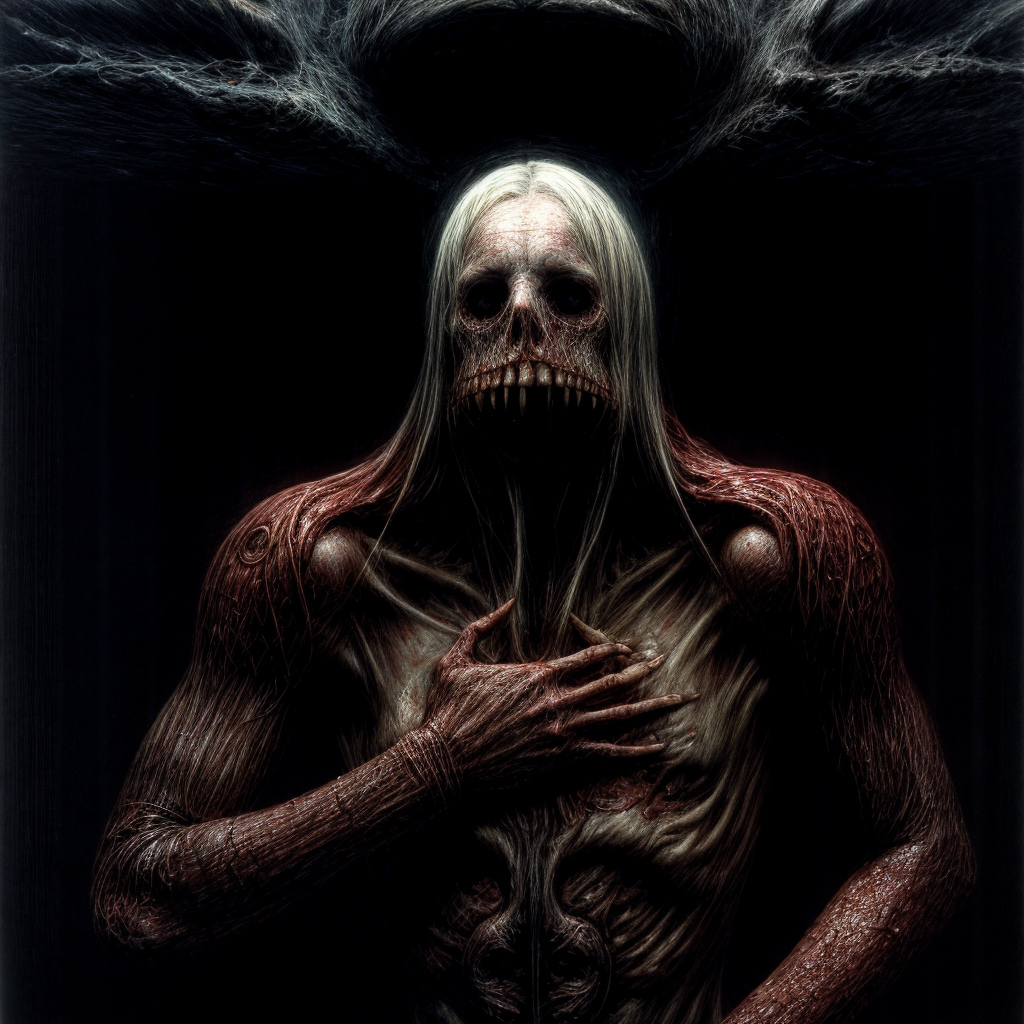
These two are more photographic than the rest. It is because I used my specially trained graphic model, which was prepared to give photographic style output.
Prompt in details:
PROMPT FOR PHOTO-BEKSINSKI
beksinski <lora:bodhor:0.65><lyco:LuisapSciFiHard_v1:0.6> <lora:LowRA:0.4> <lora:spider_web_v0.3:0.6>
<lora:add_detail:1.5> <lora:more_details:1.5>
Negative prompt: Low quality, distorted figures, unnatural colors, blurry, unrealistic, poor rendering, disproportionate, logo, watermark, cropped, worst quality, poorly lit, glitch, out of focus, mutilated, poorly drawn, disfigured, gross proportions.
Steps: 30, Sampler: DPM++ 2M Karras, CFG scale: 6, Seed: 444841727, Size: 512×512, Model hash: 412dbe437d, Model: A_NewlReal1111-SLIM, Denoising strength: 0.4, Clip skip: 2, Version: v1.2.1, Hires upscale: 2, Hires upscaler: 4x-UltraSharp
By prompt you can tell, that image like that can’t be created just like that in any online generator. It uses complex set of various submodels (mentioned earlier LORAs).
And just to keep our party hot and in good shape I invited one more guest to our image mix.
Meet Mr Hieronimus. He shaped imaginationed of millions if not billions of people, in various times.
And this is where it becomes interesting:
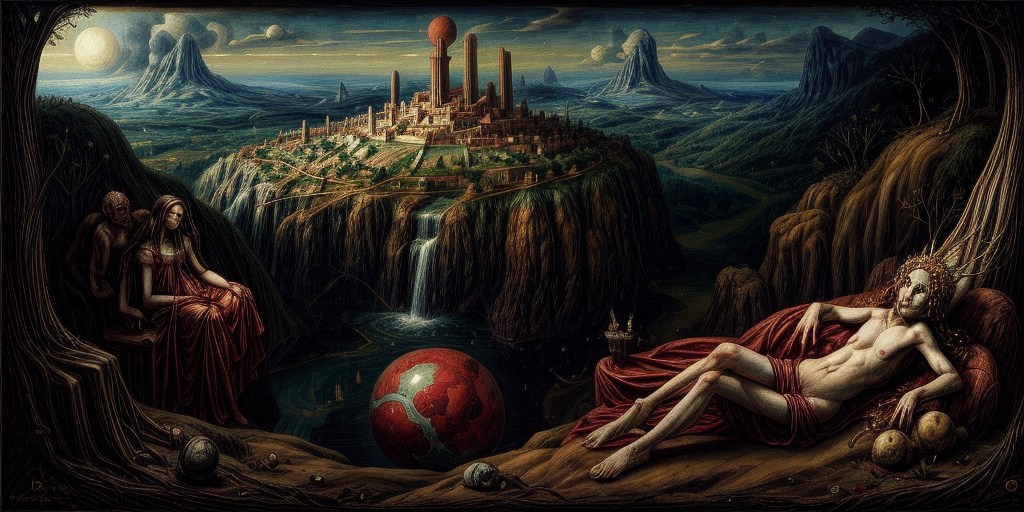
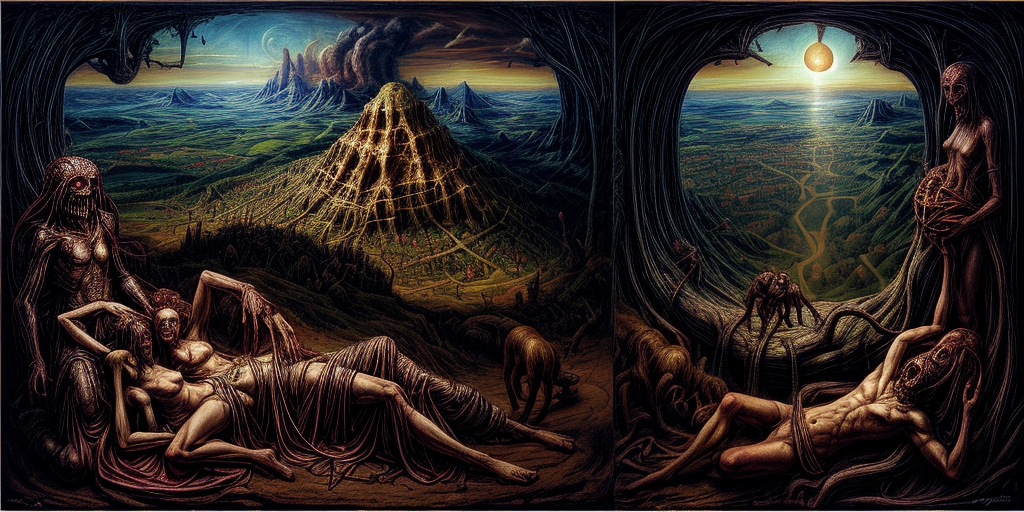
As a base for idea for prompt I used a description of Last Judgement:
“triptych portrays the final judgment of humanity by Christ. The left panel depicts the Garden of Eden, the central panel showcases the last judgment itself with heaven above and hell below, and the right panel illustrates hell and the torments awaiting the damned. The painting is replete with intricate details and imaginative depictions of sin and punishment.”
Not that I had any hope, that AI would really divide image into nice 3 parts, but more to give it feeling of what we want. And… 👇

I like that! There is this vibe of last days of humanity. The sun looks little out of place, (too positive?) but we could deal with it later if needed.
PROMPT
a realistic painting of a paradise, earthly pleasures, and hell. The left side shows the creation of the world and the Garden of Eden, the central part presents a lavish landscape filled with bizarre and alluring scenes of human indulgence, and the right side reveals a nightmarish vision of hell and damnation in style of beksinski and hieronimus Bosch <lora:bodhor:0.35><lyco:LuisapSciFiHard_v1:0.4> <lora:LowRA:0.4>
<lora:add_detail:1.5> <lora:more_details:1.5>
Negative prompt: Low quality, distorted figures, unnatural colors, blurry, unrealistic, poor rendering, disproportionate, logo, watermark, cropped, worst quality, poorly lit, glitch, out of focus, mutilated, poorly drawn, disfigured, gross proportions.
Steps: 30, Sampler: DPM++ 2M Karras, CFG scale: 8, Seed: 3984439001, Size: 1024×512, Model hash: 412dbe437d, Model: A_NewlReal1111-SLIM, Clip skip: 2, Version: v1.2.1
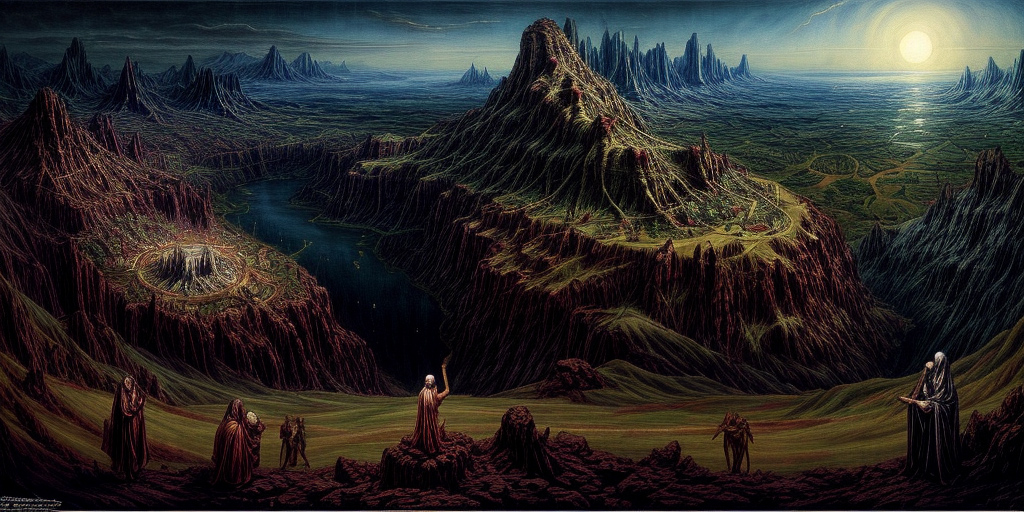
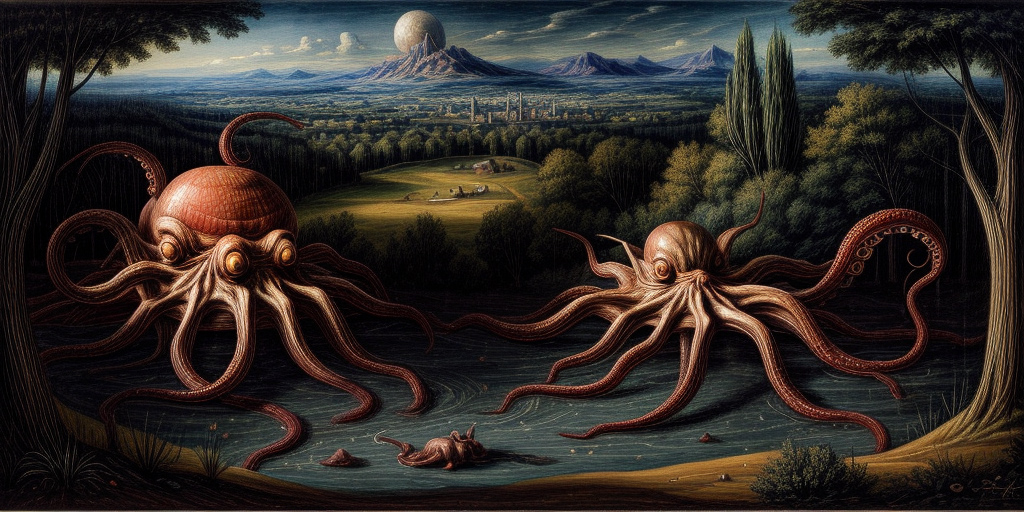
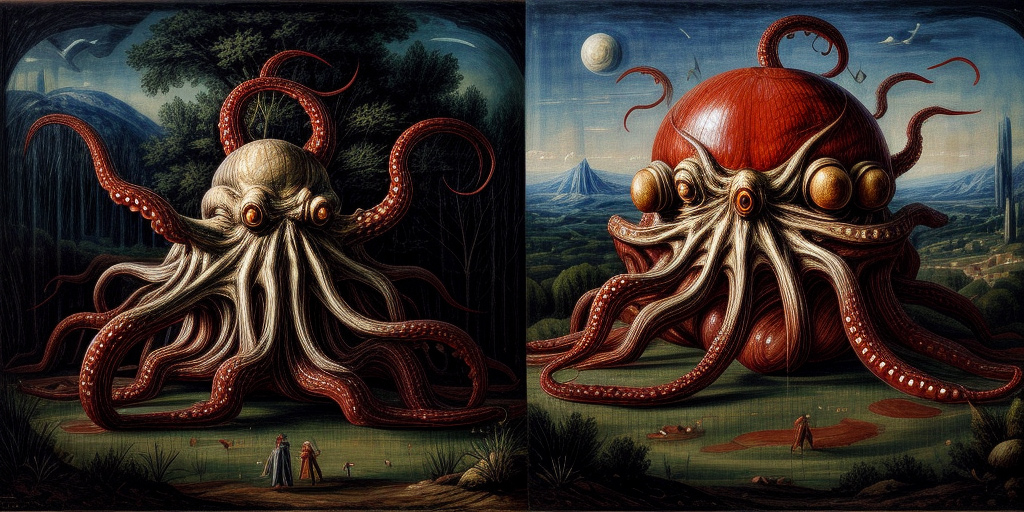
and below the rest of pictures BEKSINSKI+GEIGER+BOSCH=👇
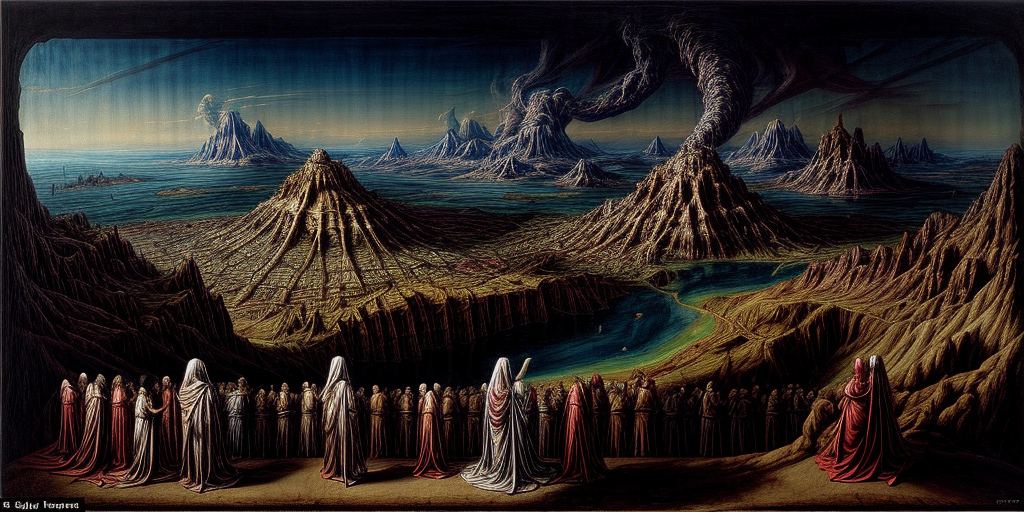
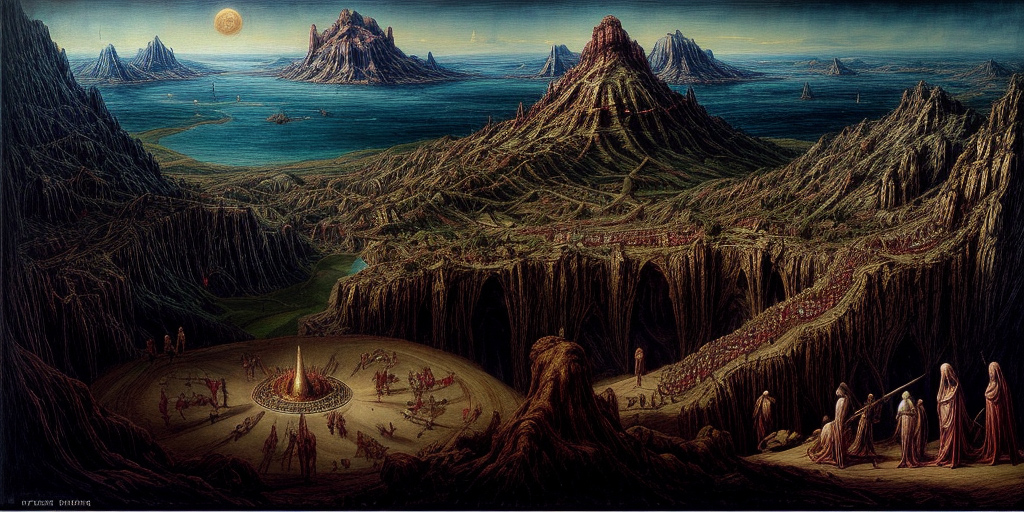
I am curious what are your feelings about all these pictures? Personally? My favorites are the one at the star, when we were just writing single pure word, an ideal message, all that AI needed: BEKSINSKI.
However, let me tell you, guys, that I do everything to avoid using artist names in my daily image creation, and there are two reasons for this:
- Developers asked, and I happily comply to use SD responsibly, just because we can it doesn’t mean we have to. Some creators cannot make an image without using – still living artists – but it is public work, and it is also being used for learning process for whole community, which is super helpful and loves to share with lots of helpful work.
- There are so many possibilities for new, individual creations, experiments, that it is just waste of effort to follow trends that are already there. You are a news maker, or new taker.
Having said that I admit I have ‘Batmanoza’ which a special kinds of sickness copmpelling you to create excessive amounts of fan and tribute and satire content about legendary dark knight himself. BEWARE!
 MODDING SIMULACRA
Leave a comment