14 November 2026
Per aspera ad astra — Killing Horizon
New tools and the help of AI have brought within reach some projects I’d spent years preparing to start. Killing Horizon is one of them.
I want to build a living space sandbox in Unreal Engine that you can play with friends. Freelancer is my starting point. I want to carry its legacy forward by imagining what happens when the world keeps moving on its own.
My goal is for AI pilots to have the same opportunities and restrictions as human players. Factions would gain and lose territory, negotiate, go to war, rise and fall. The work in this first devlog lays the groundwork for that larger simulation.
What might that look like as a player?
Imagine starting out at a station with a taxi drone, the cheapest vessel you can get. You run a few passenger jobs, learn to fly, and earn enough credits for your first ship capable of venturing into open space. Then you head to the engineering bay. With interchangeable parts such as wings and cockpits, you can build a version of the ship that suits the work you want to take on.
Expand the cargo bay and haul freight, or try your hand at scouting. If you go the mercenary route, you might start by escorting convoys and work your way up to hunting bandits. Eventually, you can afford a second ship. You look for a pilot in the station bar and find an AI pilot to fly it. Another player joins you in their own ship. Now you can take on a job you wouldn’t try alone. You fit the second ship with torpedoes for a strike on a fortified military installation.
With enough credits and materials, you can build a space base of your own. It starts small, with a hangar, a defensive turret and a warehouse for spare parts. Do you turn it into an independent shipyard? You could take up piracy, hijack ships, reverse-engineer their designs and sell your own versions. Or you could take someone else’s station by launching boarding pods full of marines from your frigates.
From there, you could build up what you own or push into new territory, take over a sector and start a faction of your own. You could command entire fleets from a strategic view and take direct control of a capital ship when you want to fly it yourself.
That’s the space opera I want to see unfold. You can get involved with friends, but the heart of it is a world with its own trade, politics and rivalries. The pilots and factions have plans of their own, and their decisions can change the story you’re playing through.
A bar worth docking for
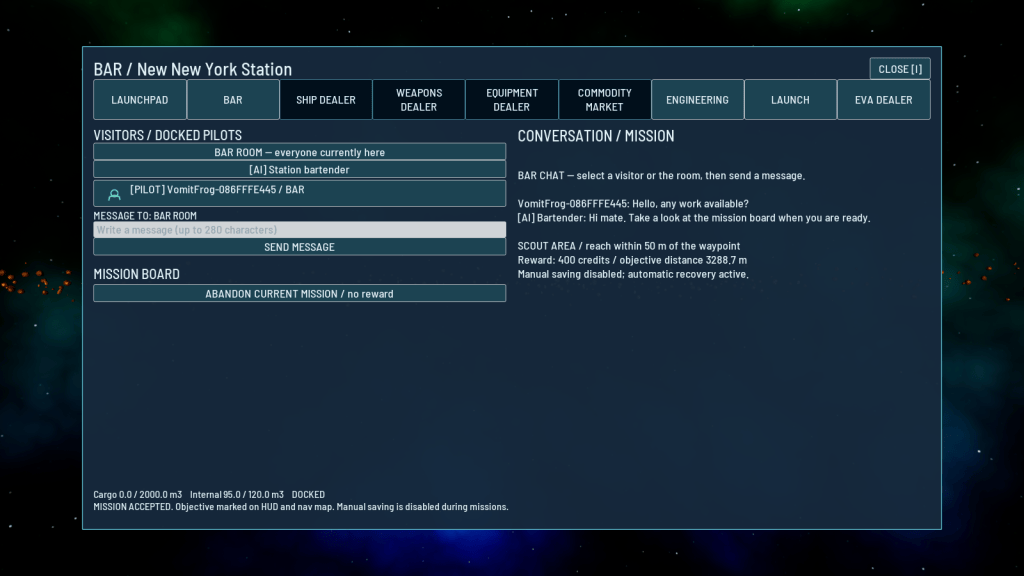
The station BAR now shows who’s docked and lets pilots talk in the room or send private messages. In three-client tests, private messages reached only their intended recipients, and each pilot kept their own missions and rewards. The AI bartender still uses placeholder dialogue.
Taking a job changes the flight
Scout and destroy-target missions now put the objective, distance and reward on the flight HUD and navigation map. I tested completion, mission persistence and protection against duplicate payouts. Each prototype has one objective. Authored mission chains are next.
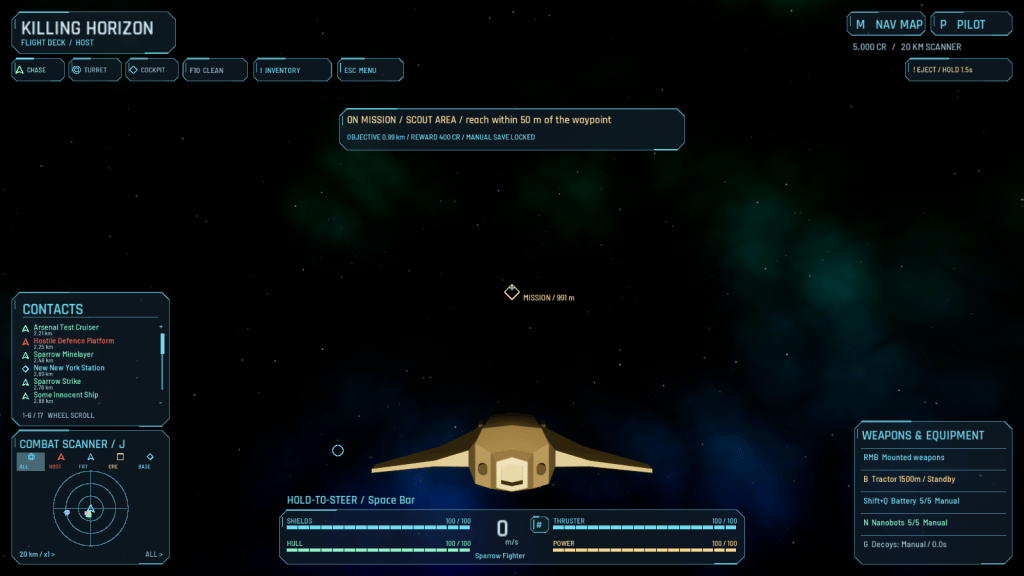
Accepting a job means committing to it. Manual saving is disabled during an active mission, and automatic recovery stays on. In reconnect and restart tests, the same scout mission came back with its progress intact. I want taking a contract to carry some tension. A dropped connection shouldn’t erase an evening’s work.
What happened with 150 fighters
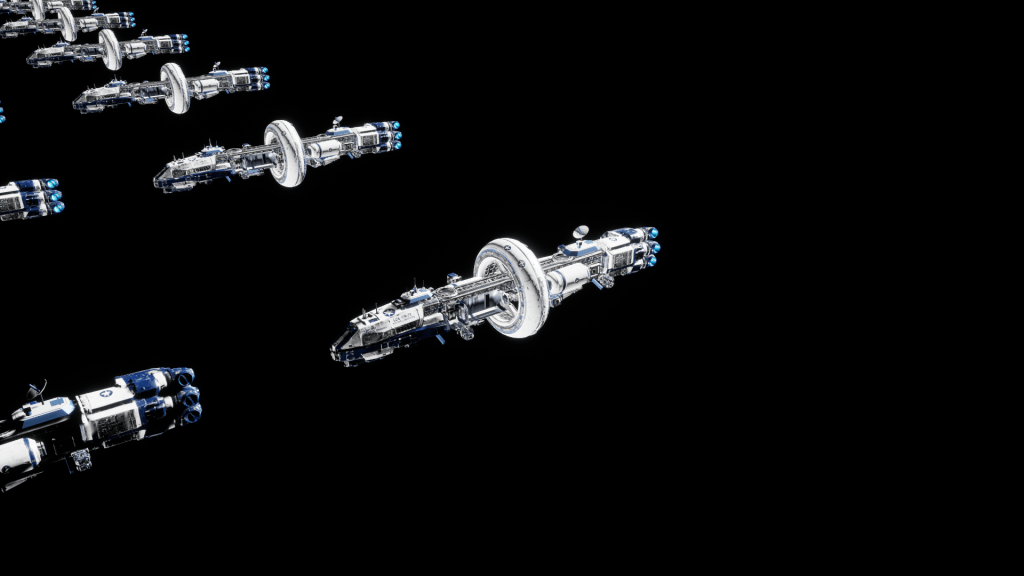
In a separate stress test, two clients and a server observed 150 fighters, along with their movement and projectiles. The test verified that those systems worked under load. Large battles still need performance work, so I’ll profile ship updates and projectile processing next.
On the drawing board
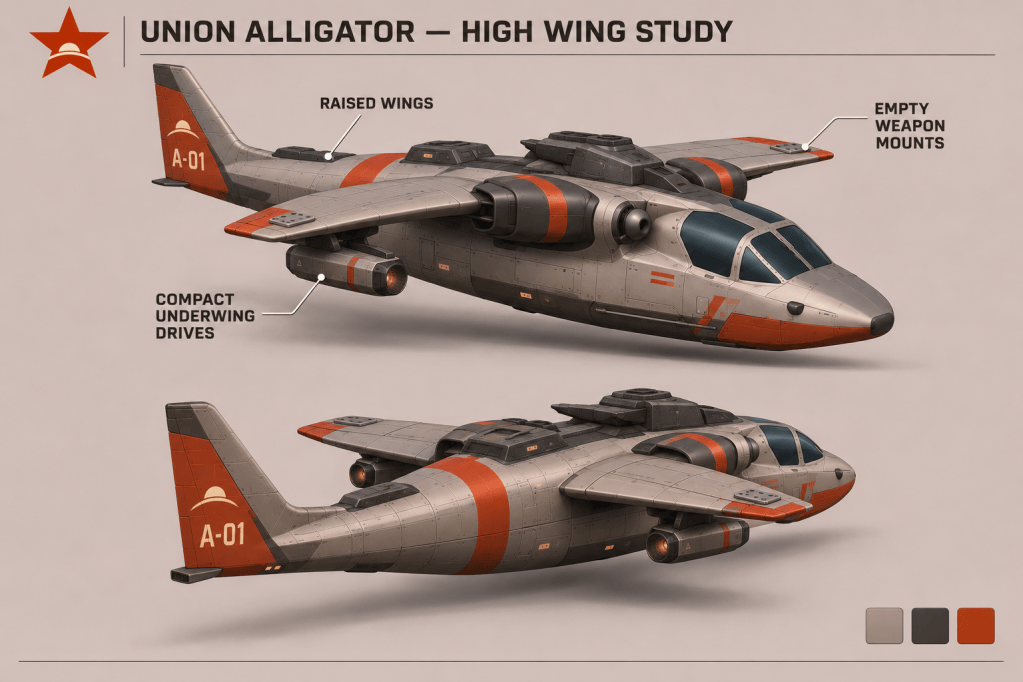
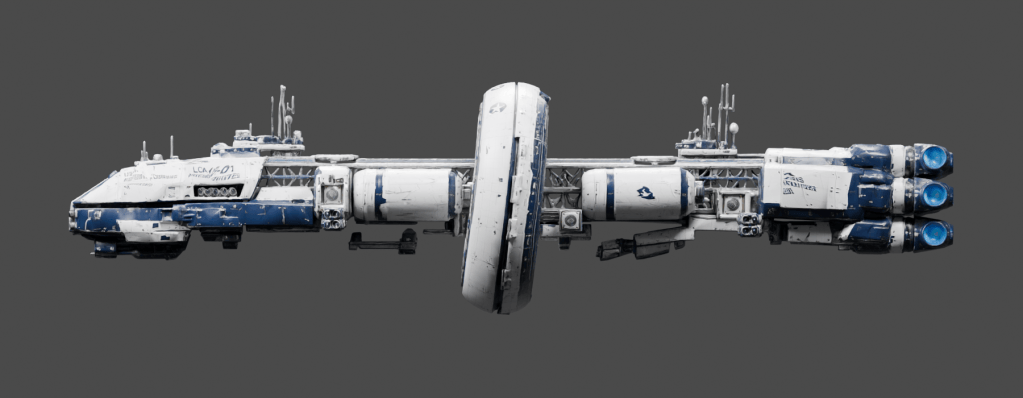
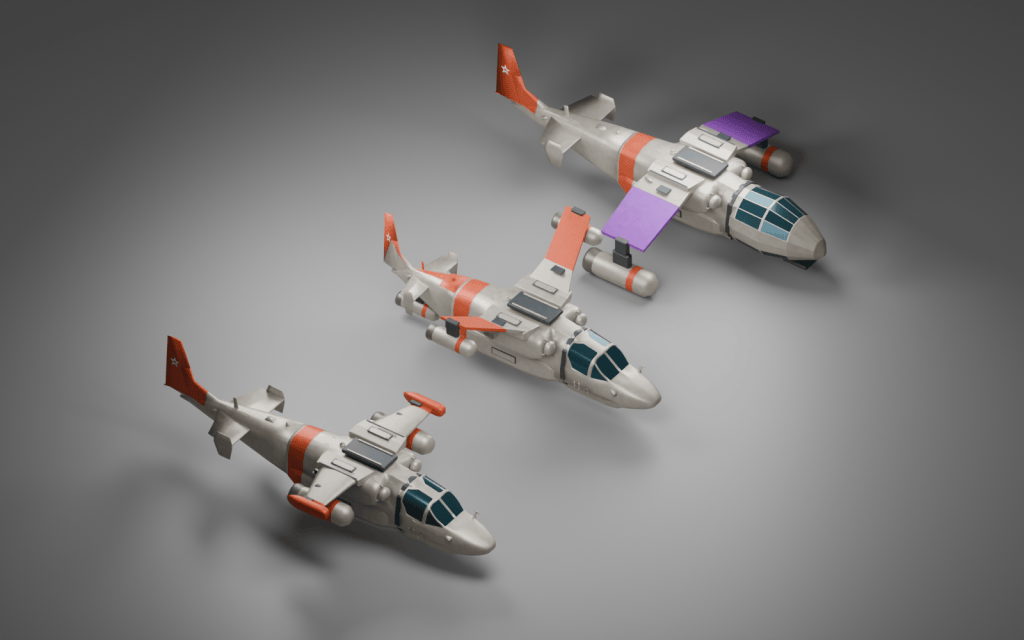
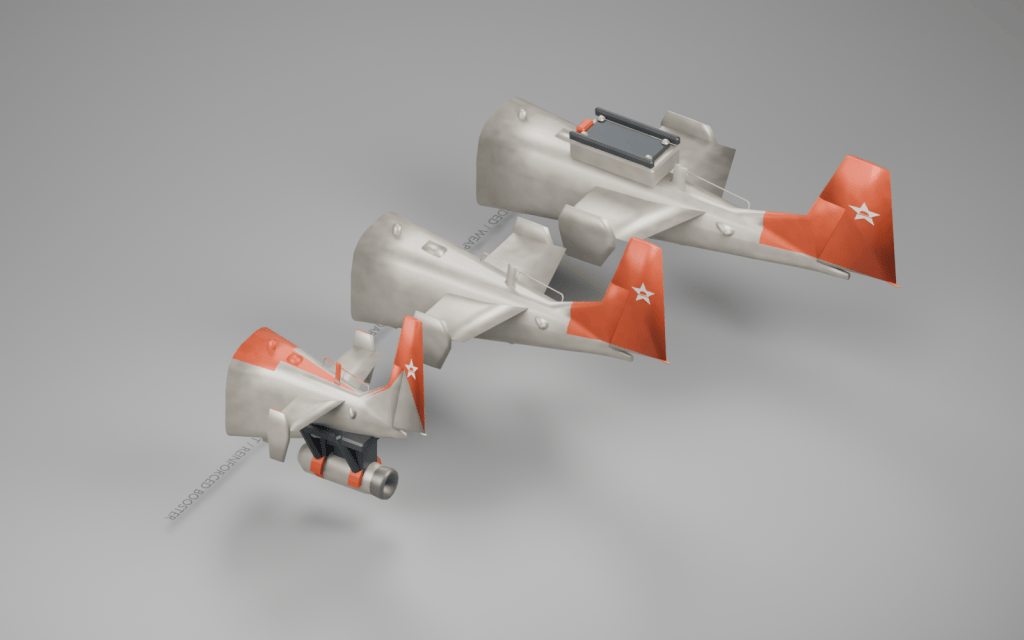
The Union Alligator high-wing concept at the top of this post shows one direction for the ship. These model studies compare wing, equipment and tail configurations.
The longer-term goal is a world where AI pilots have lives of their own, even when you’re somewhere else. For now, I’m building and testing the pieces that will make that possible.


Leave a Reply