

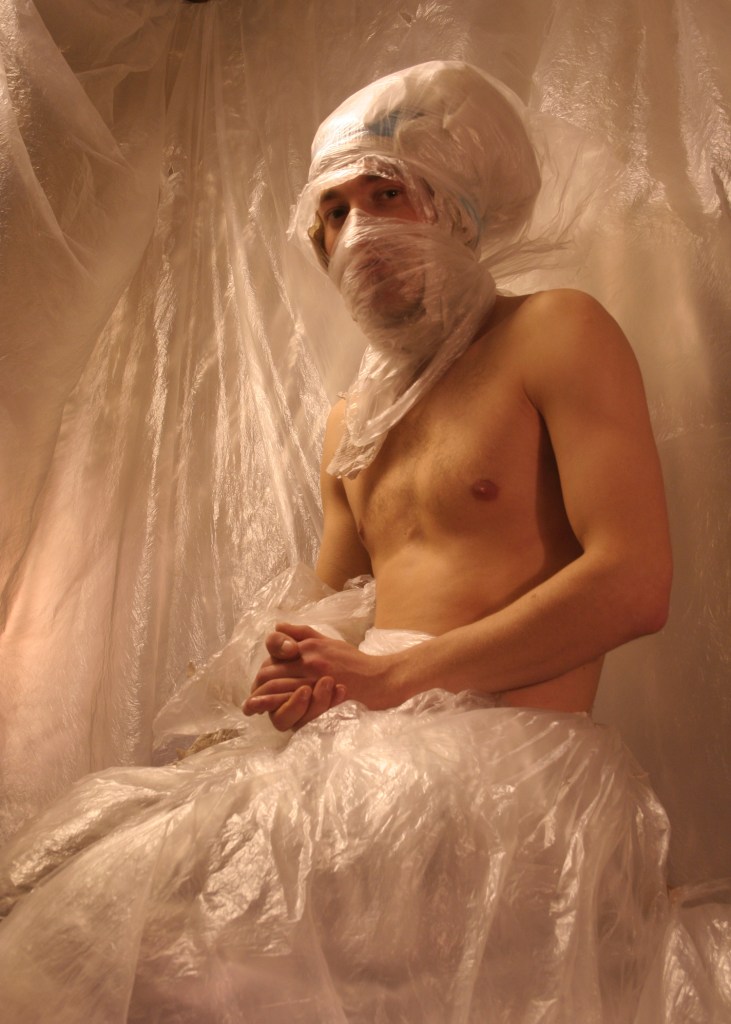

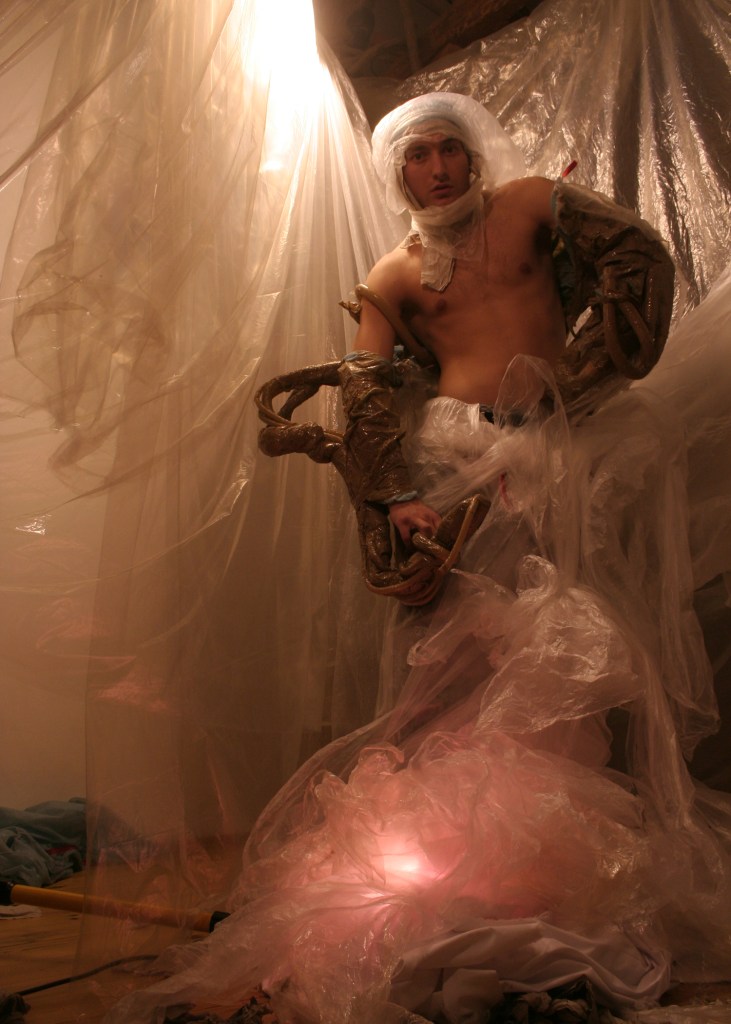


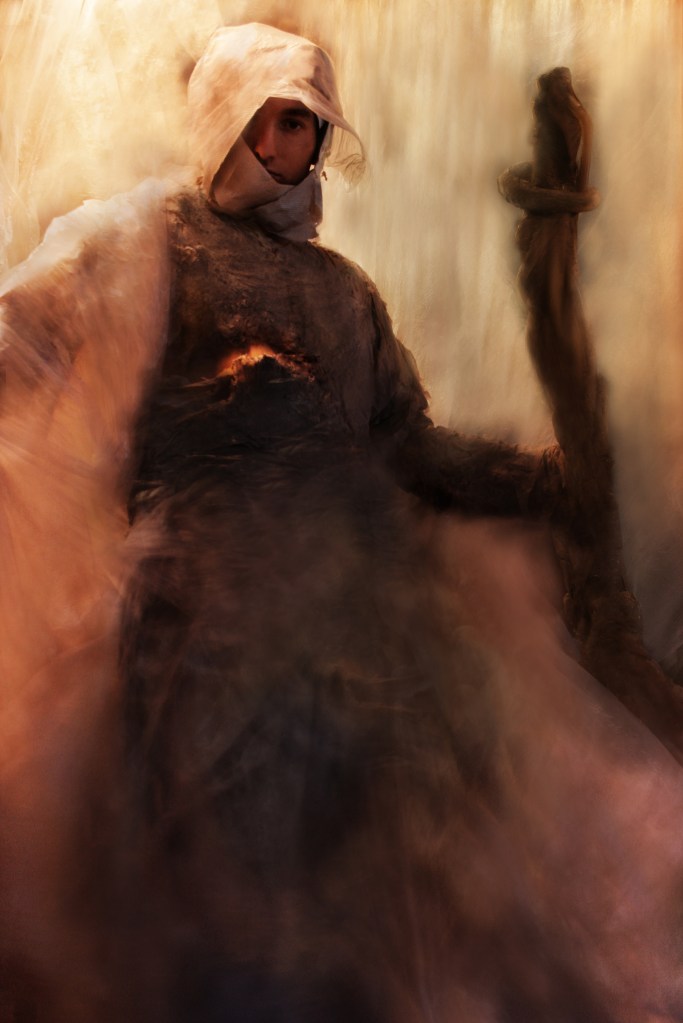

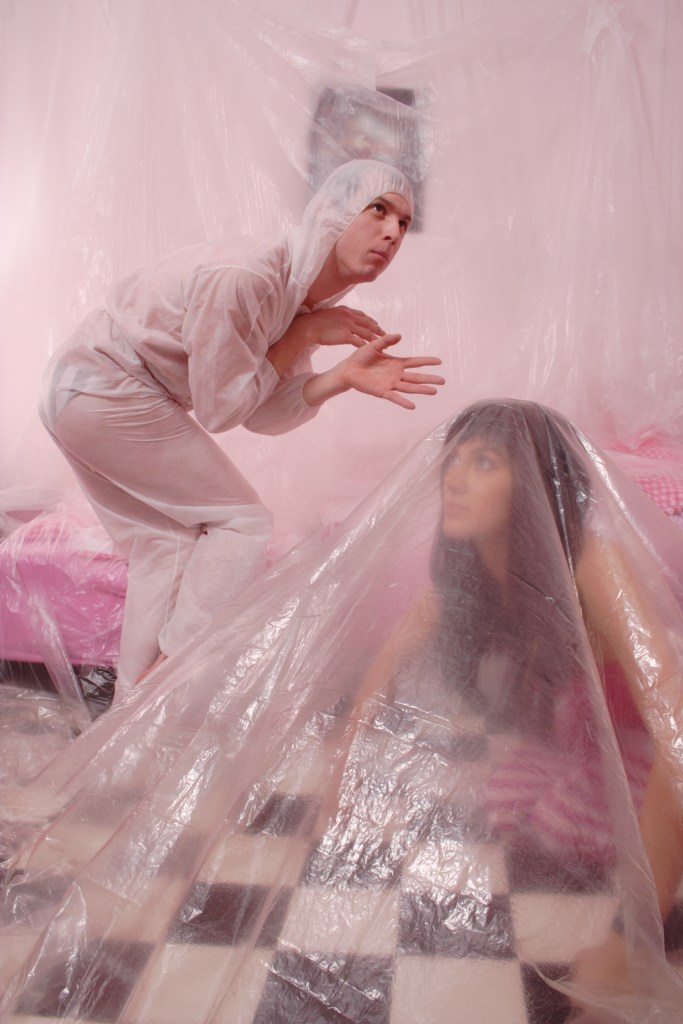


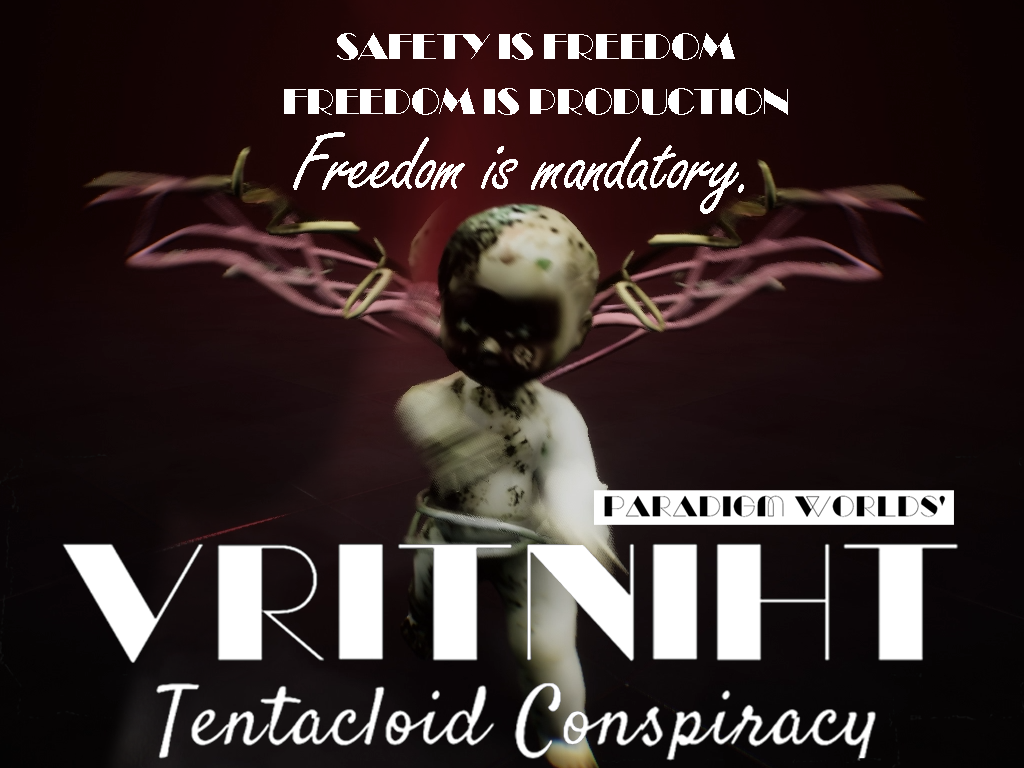
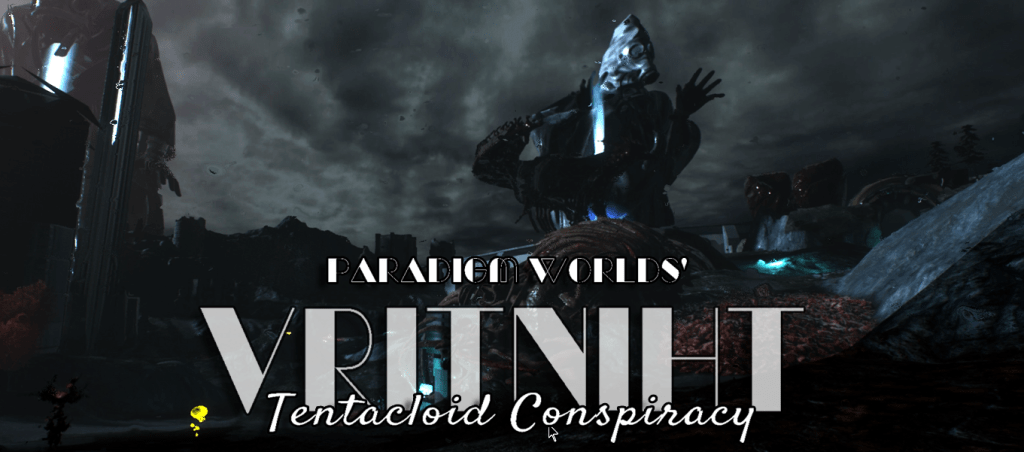
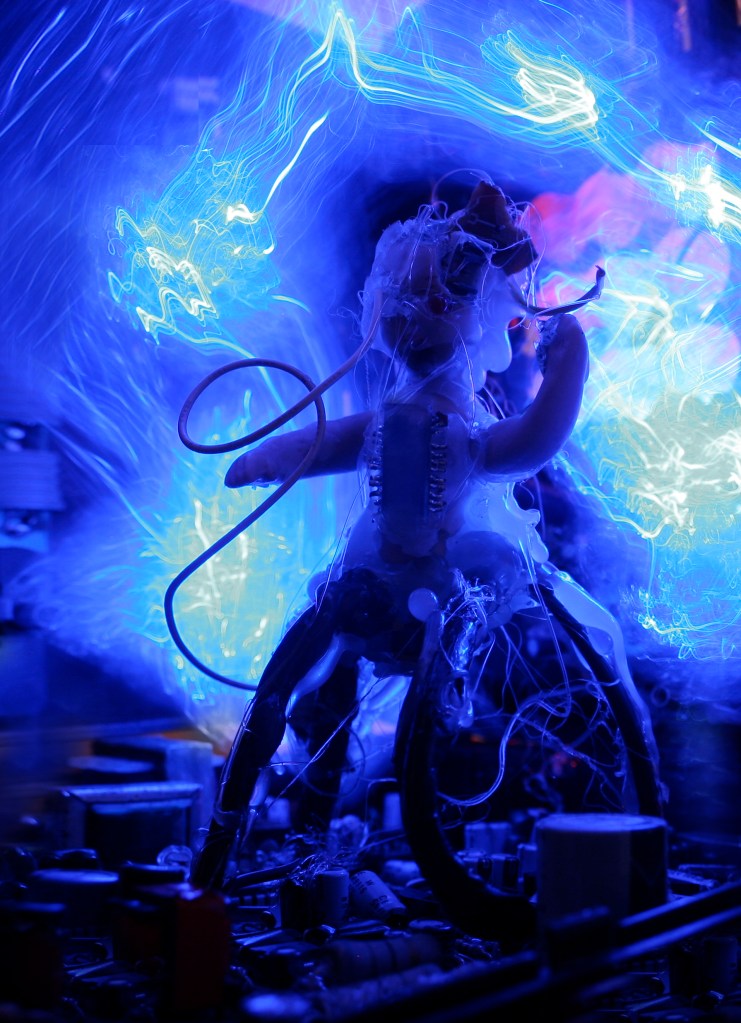
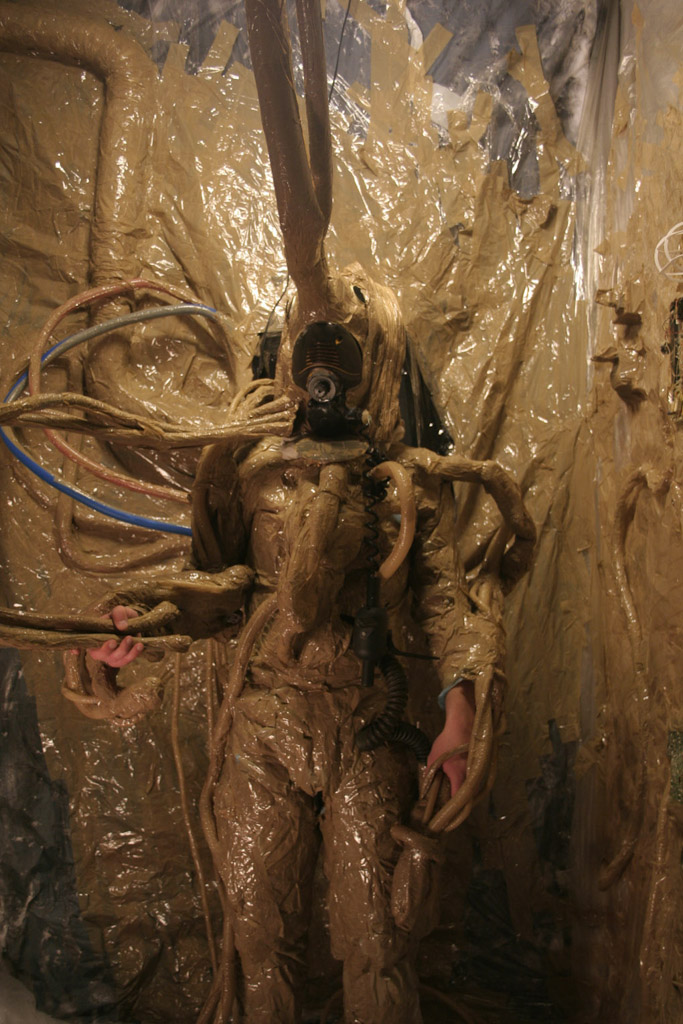
More than twenty years ago, while studying photography, my friends and I created the Foliotrons. They were strange creatures (costumes), living in a sci-fi environment — our living room, modified for an entire year.
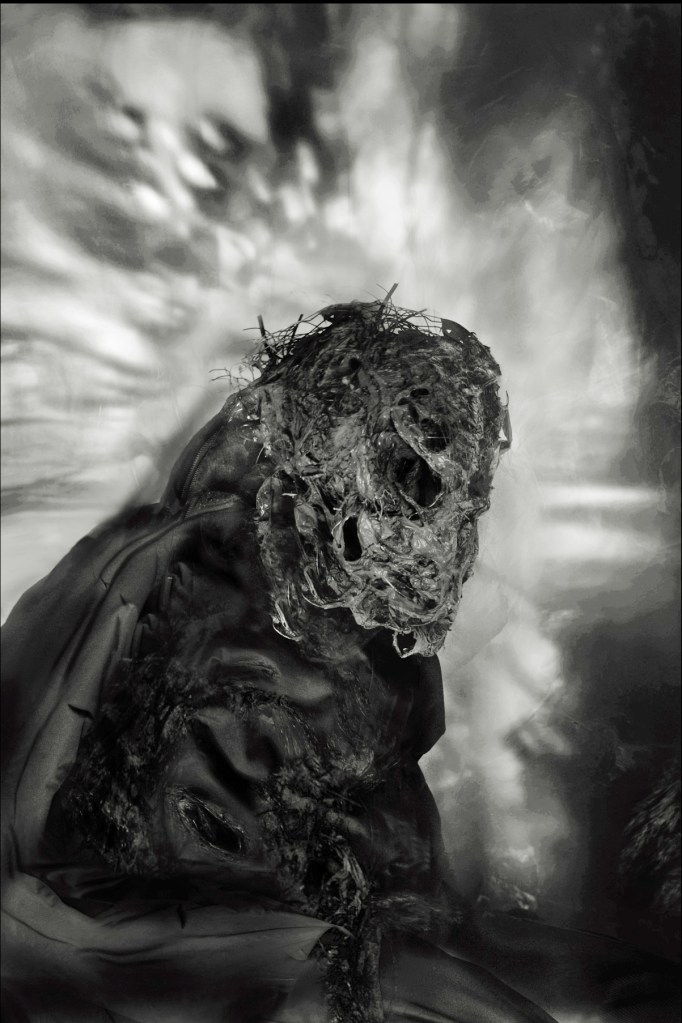
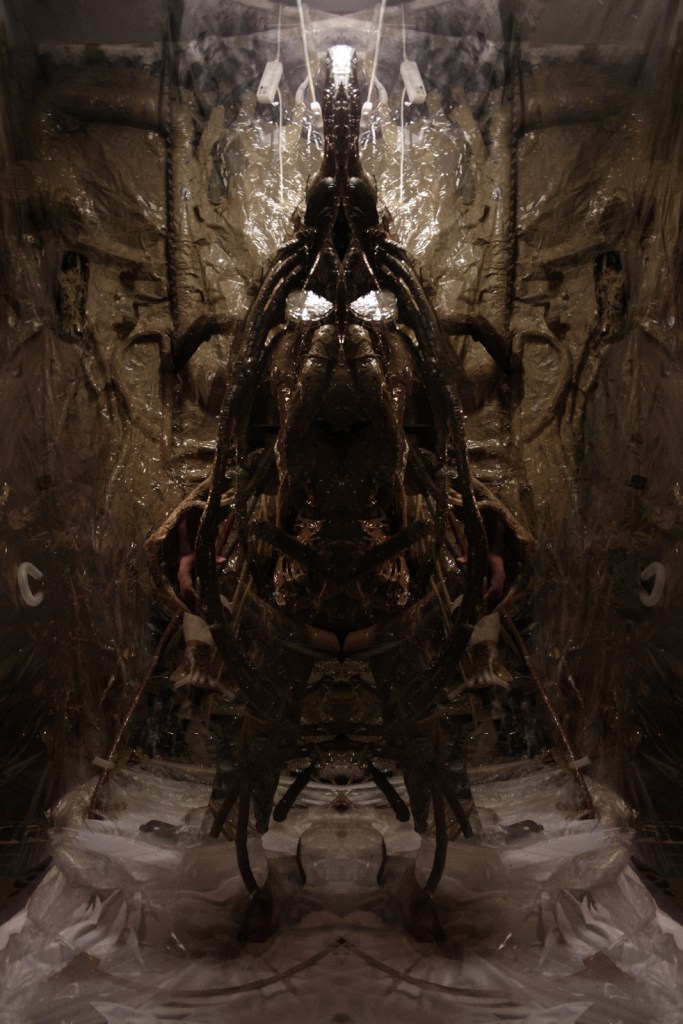
We built them by hand from old gas masks, radio parts, wires, plastic foil, and improvised materials. We even constructed an entire room covered with foil, so the environment itself became part of the illusion. Long-exposure photography allowed the figures to blur and dissolve, creating the impression that they existed somewhere between the physical and the unreal.
The original idea imagined humanity so deeply immersed in artificial realities that, after countless ages, it had forgotten the difference between the real and the virtual.
At the time, those creatures could only exist in photographs.
Twenty years later, AI finally made it possible to give them movement, volume, and life.
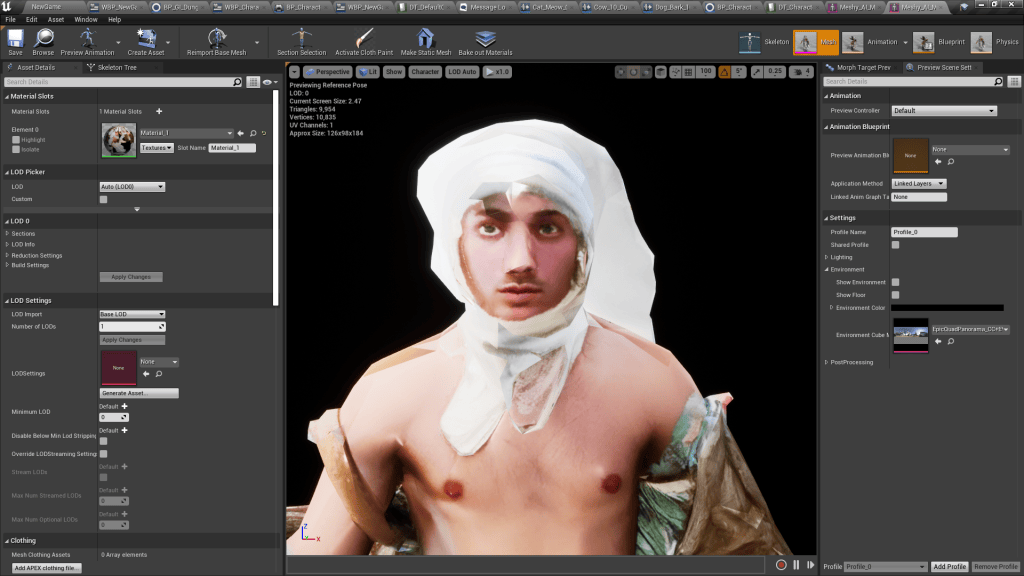
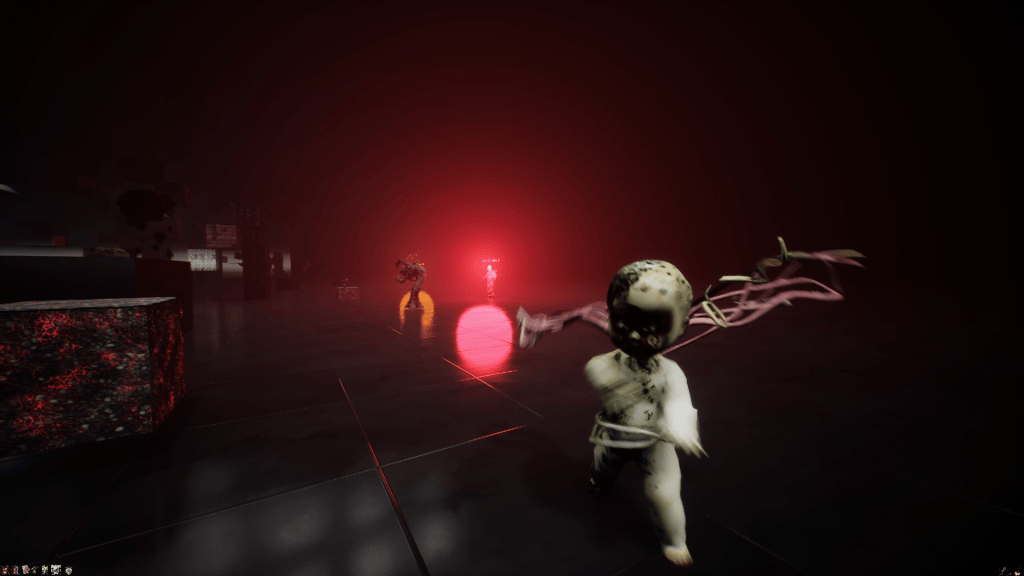
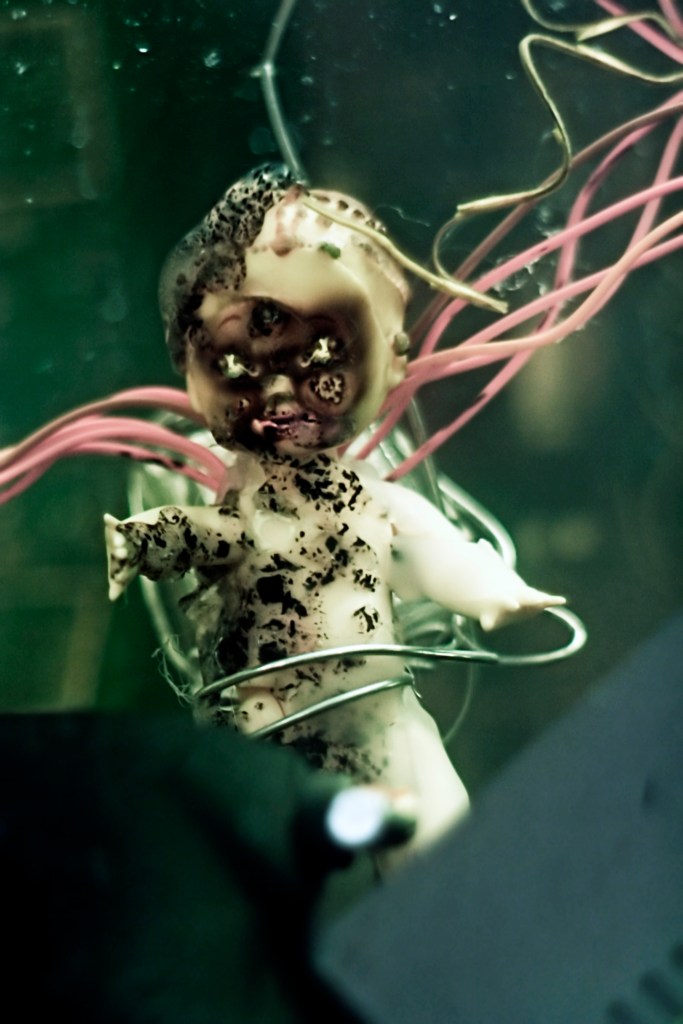
I transformed the photographs into 3D models. Making them move (rigging) triggered the next need. They are “alive”, so where should I keep them? They need their own place. But these are not anonymous creatures; their sophistication requires real effort.
That means…
…the creatures needed a whole world.
Now, if you want to create a whole new world, you go to the masters of their trade and ask for suggestions.
I always look at Umberto Eco and his The Name of the Rose. The realm recreated by Eco is — using video game language — one of the most immersive.
Immersion is our willingness to suspend disbelief about the “reality” we are experiencing.
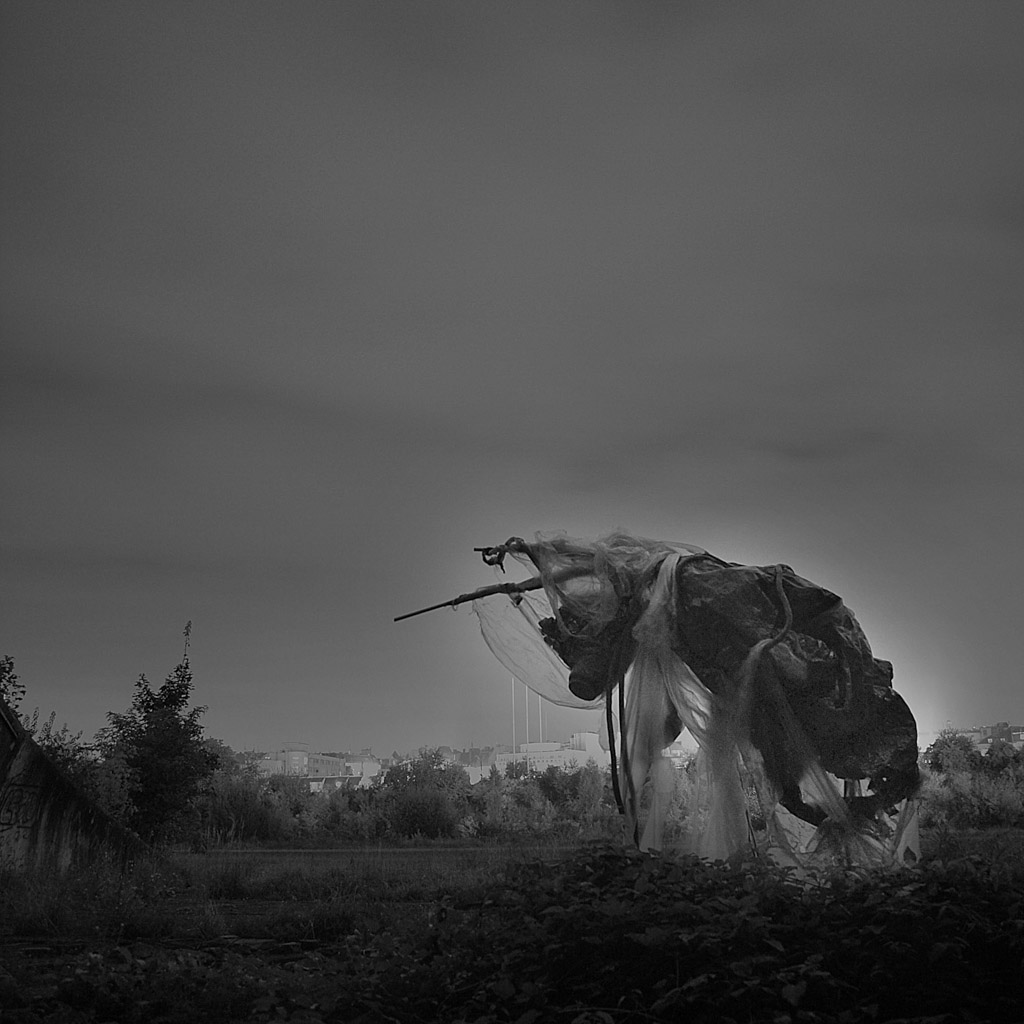
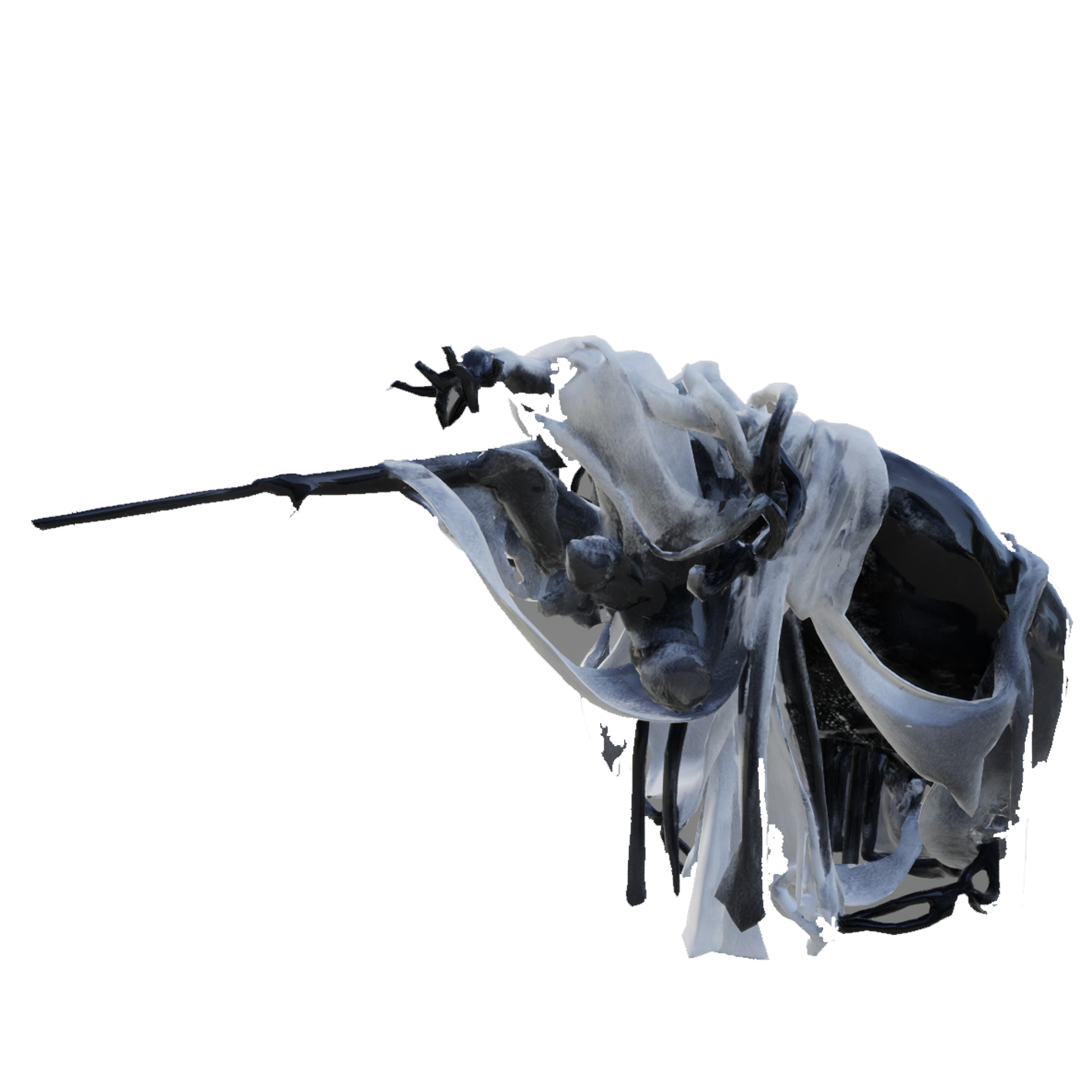
implemented in game as Enemy, making Wolf noises
also can be worn as armour
Umberto Eco, in his famous Prologue to the book, gives a simple but most important rule of world creation: you can imagine anything you want, but once you establish a rule, you have to follow it to the last detail.
How does it work in practice? I will use Eco’s example from his masterwork.
The main character, the protagonist based on Sherlock Holmes, William of Baskerville, needs to solve a mystery involving a man found in a barrel of blood. Therefore, I need to research at what time of year medieval monks used to slaughter cattle, so that enough blood could be gathered to fill a barrel.
So, this is a system.

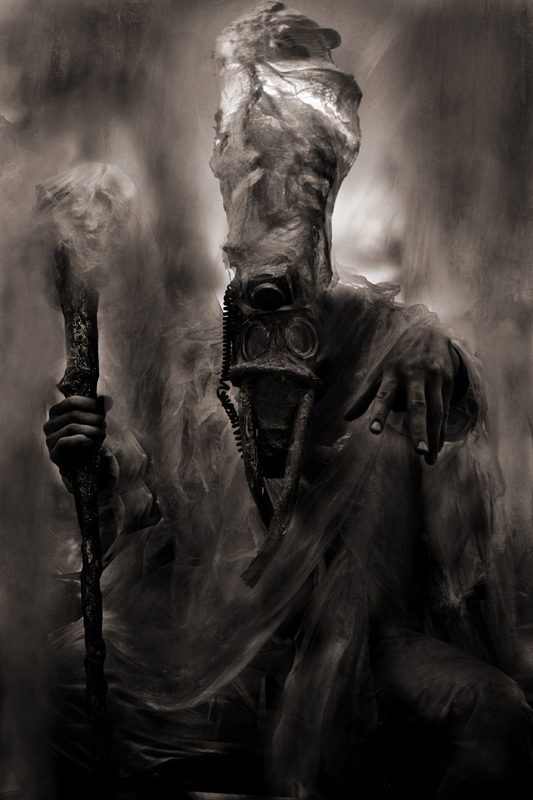
RIGHT: original photo of Foliotron
Originally, head was made from wire skeleton, gasmask, radio, with lighting bulb inside, defining all possible safety protocols btw. Foil is blurred thanks to long exposure times.
Once a single element is materialised in a story, you work from that and keep adding parts.
How we think, and how our imagination works.
Because you would expect that the most natural way of creating a world is by adding it piece by piece, carefully rethinking every step.
Well, that’s not the case, especially when making a huge video game.
To understand this fully, we need to call upon a book: Theory of Chaos. One of the biggest changes in modern science is chaos theory, and, as a result, a change in our understanding of everything.
We have simple and complex systems.
A simple system is something you can dismantle into pieces, cut into basic parts, and then, by analysing each part’s function, understand it. To give an example: a lock and key, or, more sophisticated, a clock.
It sounds “complex”, but a clock can be taken apart. Each part can be described by its function, and then we can understand how the clock works. We can manipulate it, change its speed, etc. A complex system is the opposite.
Cutting, dismantling, reducing it to a single element will not help you understand the whole.
An example of a complex system is a cloud. You can cut it in half, and it will simply split into two smaller clouds. Or try to use your imagination and think about the weather. That is a complex system as well.
Now we are going back to world creation, where your world is a complex system.
Imagine making a cloud particle by particle. Doesn’t make sense, right?
You need the whole cloud at once.
That’s how worlds are made.
They come already as ready-made systems.
For Eco, it was the medieval age and feudalism, with Christianity in Rome as a disputed centre of power.
Foliotrons are us. Thousands years in the future from now.
If we ever dive deeply enough into virtual worlds, we will become them. They are alive, but the minds of the Foliotrons are focused on their own internal world. Foliotrons are people who decided to create an idealistic world, a perfect non-material realm.
In the photographs, some of them are probably still enjoying the virtual reality of perfection. Wearing life-preserving costumes, eaten away by time, we find them in the time between worlds. Some of them are still conscious.

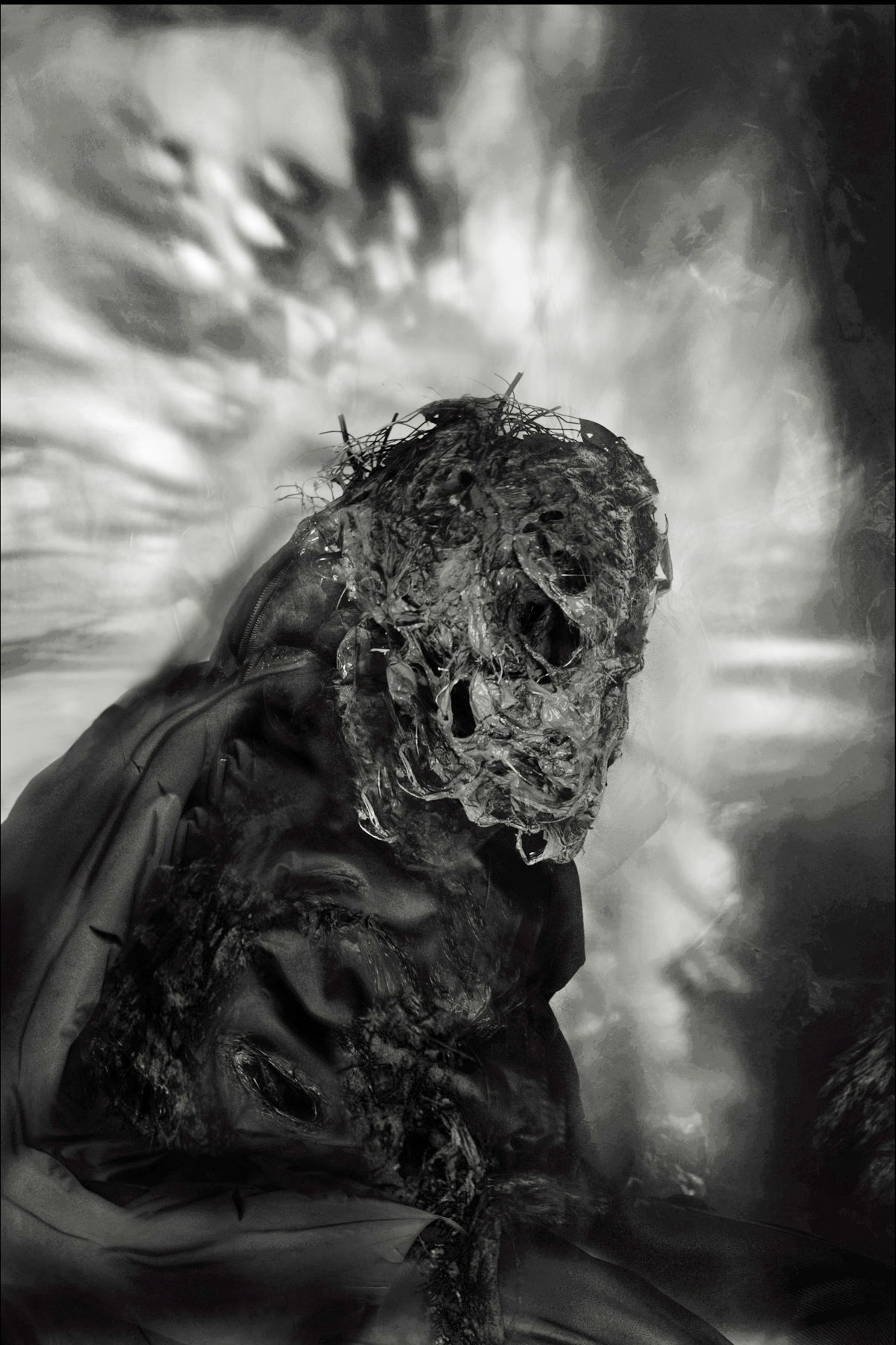
When I thought about making a world for them, it was like a thought experiment.
I imagined that they had all agreed to create a common virtual reality — a perfect world.
But no matter how ideal it was, it was still a digital creation.
Let us say that Foliotron-people were prepared to survive hundreds of thousands of years.
Finally, just because Chaos is everywhere, things have to start slowly falling apart.
But millions of years have passed, and the creatures participating in this dreamed virtual reality have forgotten, or simply lost interest in, the fact that the world they live in is fake.
They still have superior knowledge, especially compared to… the player.
His role is to lead a party of creatures — clones of various types, such as Brutoids, Fairies, or Homunkuli.
But there is a trap set for the player too, which will reveal itself later.
He is not so far above the creatures he is leading.
He is also a victim of the system. What will he do learning, that this world he was fighting, was just a fake? (I vote: denial 99% of cases – my personal opinion, based on little experiment).
So, how should the world be?
We have some main ideas.
It is falling apart.
Naturally, the Creators are the ruling elite, but they would be nothing without their minions, citizens, other creatures — call them whatever you wish.
There is a rich literature about elite overproduction: bluntly speaking, about how elites turn against themselves when there is no one left to feed on, if you are interested.
In their ideal world, they can simply spawn whatever they want.
But they are like any other falling empire: they forget the skills and knowledge of their ancestors, with each generation becoming more and more stupid.
So the process is now called “cloning.”
They are very, very old, and so is their system.
They have an obsession with overcontrolling everything and being nosy. That is because old people often feel insecure and fear a lack of control. No offence — just in general.
This would be a system focused on safety, organisation, and predictability.
So is the global game created by them.
Speaking about games, the older a system becomes, the fewer opportunities there are for success. The winning roles become more sealed, more locked, and harder to enter.
Naturally, I did not know “everything” about the world I was creating.

But by defining the fate of the Foliotrons and their place in the world, I had my own “barrel filled with blood.”
Now all I had to do was find my own monks, give them living areas, and then expand the terrain around them.
Interiors — this is where They (the Foliotrons) mostly hide — are still in relatively good shape.
But make a few steps further, and you will spot signs of decay. Some areas are “inaccessible”. Others are out of order. About certain things, you shouldn’t speak.
What is expected is participation in the fake reality, pretending that everything is all right.
This is where the player enters the world. He doesn’t know a thing about the strange reality surrounding him, but he is quickly forced to make choices.
The rest is the game.
Available for free. You can get it here — check the DOWNLOAD link.


Leave a Reply